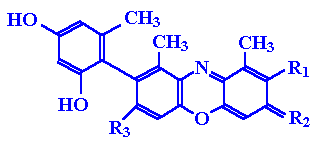
Orcein was originally obtained from lichens, but is now made
from orcinol by hydrogen peroxide oxidation with ammonia present. Several
compounds have been identified as constituents
of this dye, differing at the points R1, R2 and
R3 in the formula above. It is a standard method for the
demonstration of elastic fibres, when it is applied in an acid, alcoholic
solution. This same solution has recently been shown to be effective for
staining the rough endoplasmic reticulum of hepatitis B infected liver
cells, and it is now commonly used for that purpose.
Reference
Conn's Biological Stains R. D. Lillie. Williams &
Wilkins, Baltimore, MD., U.S.A.
The Merck Index, 12 ed. Susan Budavari, Ed. Merck &
Co., NJ, USA.