| How to roast your own coffee |
| Brewing Tips |
| Recipes |
| E-Mail: | 7bridges@breworganic.com |
| Telephone: |
1-800-768-4409 or |
| Address: | 325A River
Street Santa Cruz, CA 95060 |
| Hours of Business: | Monday-
Saturday: 10:30 am to 6:30 pm (Pacific Standard Time) |


The
Basic Ingredients of Beer
Most quality beer consists
of 4 main Ingredients:
Water
Barley
Malt
Hops
Yeast
Water:
Beer is over 90% water. Because it is the main
ingredient by volume, to brew good beer, you need to start with good
water. To keep it simple, the water you use for brewing should be
free from chlorine or other chemicals, and should have some basic
minerals. A good rule of thumb: If the water is good to drink, it is
almost always good for brewing your own beer. One exception is
distilled water- distilled water has no mineral content, which the
yeast will need to ferment the beer properly.
Most tap or spring water has a dissolved
mineral content sufficient for brewing with barley malt extract. If
using tap water and your tap water is chlorinated, you should either
filter the water or boil it to remove the chlorine. Some
municipalities are now using Chloramine for water treatment. If this
is the case in your area, the water will have to be filtered to
remove the Chloramine as boiling will not remove it. If you do not
have a water filter, buy bottled water or find a source of filtered
water nearby. Many grocery stores now have machines where you can
buy filtered water by the gallon, using your own container.
Barley
Malt
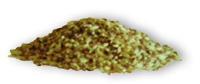
Barley malt, in whole grain form
Barley malt is the chief ingredient in beer
next to water. It is the main source of fermentable sugar, and also
contains many minerals and vitamins that help the yeast to grow.
Most brewers start out using barley malt extract, in syrup or powder
form, as in this form it is ready to boil up and ferment.
Barley malt is made from whole barley, in a
process called malting. First the grains are sprouted and allowed to
grow for a short time, until the grain proteins have been converted
into starch, the ideal food source for young plants. When the seed
has reached the optimum starch content, the growth is stopped by
kilning the barley at low temperatures to dry it out.
The darker specialty malts like caramel and
chocolate are made by heating the wet barley to temperatures of
about 150 oF. The heat activates enzymes that are
naturally present in the barley grains, which convert the starches
to sugars. After the starch conversion is completed the grains are
roasted to caramelize the sugars. The temperatures and length of
time determine the final color of the specialty malt.
Barley malt extract is made by mashing the
pale barley malt in water to convert the starches to sugars. After
starch conversion, the sugars which are dissolved in the liquid are
rinsed through the grains, a process known as sparging. The sweet
liquid is then condensed into barley malt extract or spray dried
into dry malt extract. This is usually done at low temperatures in a
vacuum environment to preserve the light color of the barley malt
extract.
Hops
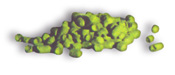
Hops, in pelletized form
Hops, as used for brewing, are the flowers of
the hop plant, a climbing viney plant that grows well in many
climates. Hops contain acids which add bitterness to beers is boiled
for a period of time. Adding bitterness to beer helps to balance the
sweetness of the beer, as well as acting as a natural preservative.
Hops also add flavor if boiled for a shorter duration. If boiled for
a very short time, steeped at the end of the boil, or added fresh to
the fermenting beer, hops also add a delicate aroma to beer.
As the oils present in hops that add flavor
and aroma are highly volatile, they are easily lost in an extended
boil. Thus , many recipes for beer call for adding hops in 2 or 3
stages:
Bittering or boiling hops: If boiled for over
45 minutes, a significant amount of bittering from the hops is
dissolved into the beer.
Flavor Hops: If boiled for 10- 20 minutes, the
flavor compounds are released into the beer without adding too much
bitterness. Most of the aroma is lost, even with a shorter
boil.
Aroma or finishing hops: A delicate hop aroma,
a desired characteristic of many beers, is infused into the beer if
the hops are added in the last 5 minutes of the boil, or steeped at
the end of the boil, or added to the fermenter. Adding hops in the
fermenter is called dry hopping.
Hops have not always been the primary herb
used in beer. Centuries ago, many other herbs were used to add
bittering, flavor, and medicinal properties to beer and other
fermented beverages. Some of the herbs traditionally used in beer
include mugwort, heather, and wormwood
Yeast
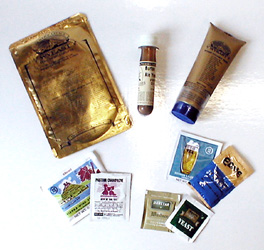
Types of yeast available
to home brewers
(clockwise from top left)
Wyeast liquid yeast in a foil self starting
pouch (available in 2 sizes), White labs liquid yeast in a 35
ml tube, Wyeast liquid yeast in a 150 ml tube, dry ale &
lager yeast's (Vierka Lager, Edme Ale, Munton's Gold Ale, and
Danstar Ale) , and dry wine yeast (Red Star and Vierka
Mead).
Without yeast, beer would not exist. Yeast is a unique
single cell organism that eats sugar and expels alcohol and carbon
dioxide. Yeast comes in many variations, or strains, and there are
two major categories of yeast that determine the type of beer
produced.
Ale yeast is the most commonly used by home brewers. Ale
yeast is top fermenting, meaning that it concentrates near the top
of the fermenting beer. Because it thrives in warmer temperatures,
usually between 60 to 75 oF, ales can be fermented at
room temperatures without any temperature controlling equipment.
Examples of beers fermented with ale yeast include Pale Ale, Nut
Brown Ale, and Stout.
Lager yeast is a bottom fermenting yeast that ferments at
lower temperatures, usually between 45 to 60 oF. After
the lager is fermented is is often allowed to condition in the
fermenter at very low temperatures (usually between 35 to 45
oF) for 2 to 8 weeks. This process is called lagering.
Examples of beers fermented with lager yeast include Pilsner,
Marzen, and Bock.
Yeast for home brewing is available in two forms, liquid
and dry.
Dry brewers
yeast is similar in appearance to common bakers yeast (unless you
want beer that tastes like bread, stay away from bakers yeast for
brewing), having a grainy, powdery appearance. To produce this
yeast, the living yeast cells have been dehydrated carefully so that
the water inside of the living yeast cells is removed without
killing the yeast. When the dry yeast is introduced to liquid, it
becomes rehydrated and is ready for brewing. To achieve the best
results when using dry yeast, it is a good idea to rehydrate the
yeast in water, and then add the rehyrated yeast to the unfermented
beer. Dry beer yeast is inexpensive and has a shelf life of 1 to 2
years if stored in a refrigerator. The selection of dry yeast is
limited, however.
Liquid brewers
yeast is hydrated yeast in a hibernating state stored in a liquid,
and is available to home brewers in two forms. Some yeast is
available in a tube or vial that is ready to pour into the
fermenter; no preparation of the yeast is required. Dozens of
strains, both ale and lager, are available. Liquid yeast in this
form is very perishable and is usually only viable if used within 4
months of production, unless a starter is made (see our brewing tip,
making
a yeast starter).
Some liquid
yeast is also available in a foil self starting pouch. These pouches
have a small bubble of sterile nutrient solution sealed inside,
floating in the liquid yeast solution. Before brewing, the small
inner bubble is popped to mix the nutrients with the yeast. This new
source of nutrients causes the yeast to "wake up" from hibernation
and start to grow. This causes the foil pouch to swell, indicating
the yeast is ready to add to the fermenter.

Home • Catalog
• Brew Tips • Recipes •
How to
Brew • Contact Us •
Order
• Privacy
The Basic Ingredients of Beer
Water:Beer is over 90% water. Because it is the main ingredient by volume, to brew good beer, you need to start with good water. To keep it simple, the water you use for brewing should be free from chlorine or other chemicals, and should have some basic minerals. A good rule of thumb: If the water is good to drink, it is almost always good for brewing your own beer. One exception is distilled water- distilled water has no mineral content, which the yeast will need to ferment the beer properly. Most tap or spring water has a dissolved mineral content sufficient for brewing with barley malt extract. If using tap water and your tap water is chlorinated, you should either filter the water or boil it to remove the chlorine. Some municipalities are now using Chloramine for water treatment. If this is the case in your area, the water will have to be filtered to remove the Chloramine as boiling will not remove it. If you do not have a water filter, buy bottled water or find a source of filtered water nearby. Many grocery stores now have machines where you can buy filtered water by the gallon, using your own container.
|
|
|
|
Without yeast, beer would not exist. Yeast is a unique single cell organism that eats sugar and expels alcohol and carbon dioxide. Yeast comes in many variations, or strains, and there are two major categories of yeast that determine the type of beer produced.
Ale yeast is the most commonly used by home brewers. Ale yeast is top fermenting, meaning that it concentrates near the top of the fermenting beer. Because it thrives in warmer temperatures, usually between 60 to 75 oF, ales can be fermented at room temperatures without any temperature controlling equipment. Examples of beers fermented with ale yeast include Pale Ale, Nut Brown Ale, and Stout.
Lager yeast is a bottom fermenting yeast that ferments at lower temperatures, usually between 45 to 60 oF. After the lager is fermented is is often allowed to condition in the fermenter at very low temperatures (usually between 35 to 45 oF) for 2 to 8 weeks. This process is called lagering. Examples of beers fermented with lager yeast include Pilsner, Marzen, and Bock.
Yeast for home brewing is available in two forms, liquid and dry.
Dry brewers yeast is similar in appearance to common bakers yeast (unless you want beer that tastes like bread, stay away from bakers yeast for brewing), having a grainy, powdery appearance. To produce this yeast, the living yeast cells have been dehydrated carefully so that the water inside of the living yeast cells is removed without killing the yeast. When the dry yeast is introduced to liquid, it becomes rehydrated and is ready for brewing. To achieve the best results when using dry yeast, it is a good idea to rehydrate the yeast in water, and then add the rehyrated yeast to the unfermented beer. Dry beer yeast is inexpensive and has a shelf life of 1 to 2 years if stored in a refrigerator. The selection of dry yeast is limited, however.
Liquid brewers yeast is hydrated yeast in a hibernating state stored in a liquid, and is available to home brewers in two forms. Some yeast is available in a tube or vial that is ready to pour into the fermenter; no preparation of the yeast is required. Dozens of strains, both ale and lager, are available. Liquid yeast in this form is very perishable and is usually only viable if used within 4 months of production, unless a starter is made (see our brewing tip, making a yeast starter).
Some liquid yeast is also available in a foil self starting pouch. These pouches have a small bubble of sterile nutrient solution sealed inside, floating in the liquid yeast solution. Before brewing, the small inner bubble is popped to mix the nutrients with the yeast. This new source of nutrients causes the yeast to "wake up" from hibernation and start to grow. This causes the foil pouch to swell, indicating the yeast is ready to add to the fermenter.
Home • Catalog • Brew Tips • Recipes • How to Brew • Contact Us • Order • Privacy
© 2003 Seven Bridges Cooperative