


IMPORTANT JUYO KATANA BY KAZUSA KANESHIGE
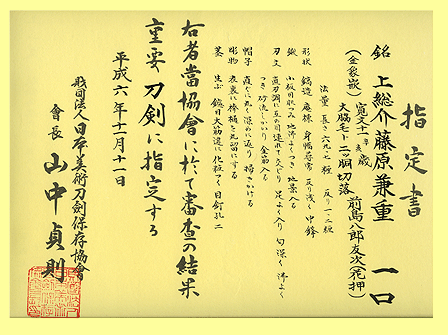
This is a truly outstanding Shinto katana by the Jo-saku smith Kazusa (no) Suke Fujiwara Kaneshige. It was awarded Juyo Token status in 1994. His works are rated as Ryowazamono (extremely sharp). This sword also has a cutting test which states that it cut through two bodies in one stroke.
Kazusa (no) Kami Kaneshige worked in the Kanbun era or around 1661. This smith had very close ties with Kotetsu who is perhaps the most famous of all Shinto smiths. In fact, he is thought by some to have been the teacher of Kotetsu. Kazusa (no) Kami Kaneshige was born in Kanei 2 (1625). He was either the son or younger brother of the first generation Izumi (no) Kami Kaneshige. He had very close ties with the third and fourth generation Yasutsugu sword smiths.
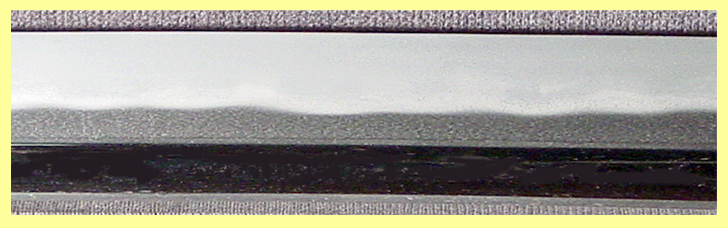
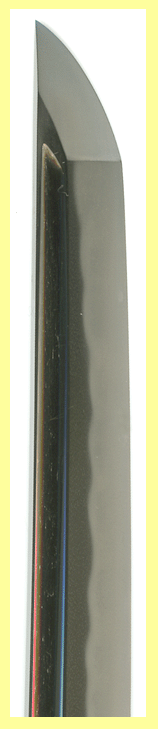
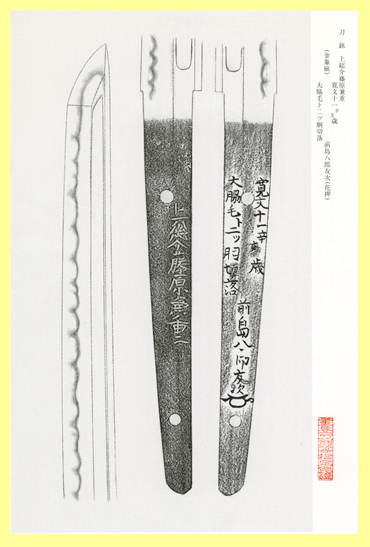
This fine blade is typical of his work. The sori is modest and typical of Kanbun Shinto blades. There is a marked diference in width betwen the kissaki area and the moto area. The hada is a beautiful tight itame showing the grain formaitons clearly. There is ample ji-nie present. The hamon is uniquely his in that it is done in a juzuba form very similar to that of Kotetsu. The gunome are produced in a bead-like sequence formed in a repetative on one-two one-two formation. The kissaki is compact and medium sized.
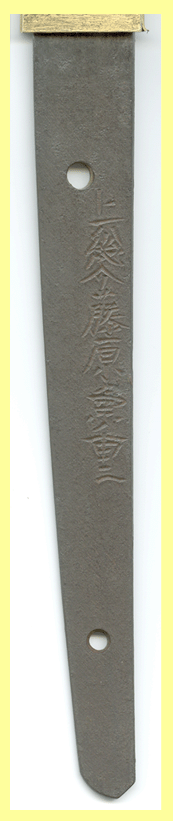
The nakago has a markedly tapered ha-agari kurijiri tip just like Izumi (no) Kami Kaneshige's. He added a complete form of kesho to the yasurime at the top.
As stated, this sword comes with a two body cutting test inalid in gold on the tang. The date of this cutting test is 1671 and it was perfomed by Maeshima Hachiro Tomotsugu. Because this smith's blades were known fo rtheir sharpness, many of the remaining examples have cutting tests.
BLADE DETAILS:
NAGASA: 69.7 cm
SORI: 1.2 cm
MOTOHABA: 2.85 cm
SAKIHABA: 1.95 cm
NAKAGO: 21.6 cm
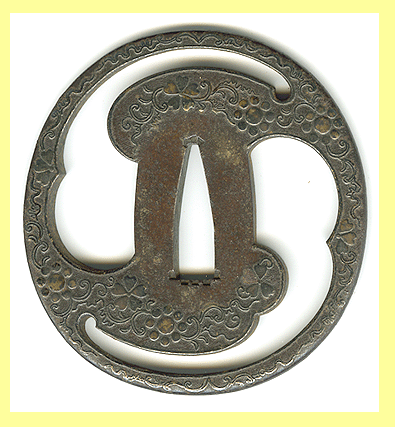
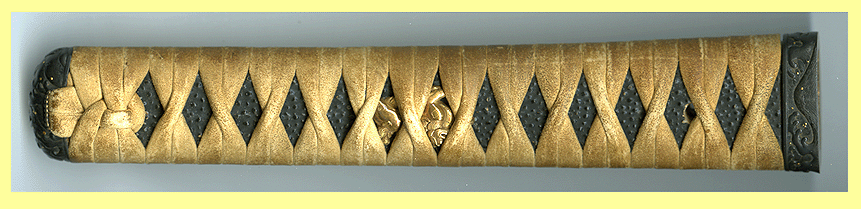
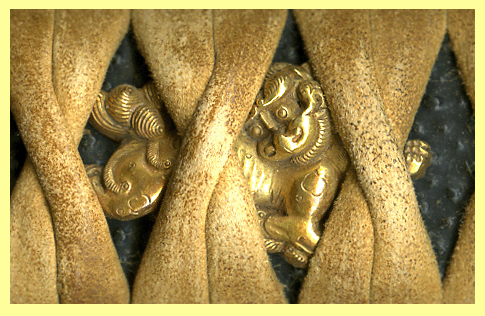
This sword is also accompanied by a fine set of koshirae. It is done in the Tensho style which was popular in the late 1500's. The saya is a same-zaya which would almost be cost prohibitative to reproduce today. The tsuba is iron sukashi from the Higo school. It has a wonderful design of tendrils and family mon which are inlaid in silver. The menuki are solid gold shishi lions and are impressive in their own right. The fuchi and kashira are shakudo with a wave design artfully cut into them. The tsuka is wrapped in doe skin and is in excellent condition.
If you are looking for a top quality katana with a cutting test and wonderful koshirae, here is your opportunity to own just such an item.
PRICE: Price on request.
