13 - Seasons And Festivals
It was the day before Hallowe'en and my caravan site was closing for the winter season. As always, I had left the packing and cleaning to the last evening, reluctant to believe that as Samhain, the Celtic name for Hallowe'en, recalls, it really was summer's end. Then the worst storms in the UK since the 1987 hurricane blew up and suddenly there was total darkness. Fortunately I have a number of candles, but the light was not great enough to continue working (at least that was my excuse). All round was total blackness with only the sound of the wind and crashing sea and the centuries slipped away. Time without the clock was now measured by the burning down of the candles and took on another dimension. Though it had been barely five o'clock when the power cut occurred, it was already dark.
It truly was time out of time and the rhythms of the modern world that had ruled even my country haven suddenly ceased to exist. It was not possible to read, work, watch television, listen to music or, most importantly, keep an eye on the clock in order to know when to switch to the next period of activity or to meet external demands. I could not drive home because the roads were closed.
Suddenly, seasonal magick made a great deal of sense, for if you do live by natural light, then in winter, with its long and cold nights, your body will slow down and your priorities will become food, rest and warmth, needs expressed magically in the ancient festivals of winter.
Living By The Seasons
It may be that our very early ancestors mainly made love in the late spring/early summer when the energies of the Earth were rising and the days getting longer and warmer. In this way, the newly pregnant mother could benefit from an abundance of fresh food in the summer and autumn and give birth at a time when she would naturally be resting for the winter with the dark nights. This would enable her to spend time with the infant before returning to the fields or to tend the herds in spring. This pattern is reflected in the old myths of the Virgin Goddess, who became pregnant at the spring equinox and gave birth to the new Sun on the mid-winter solstice that became christianised as our Christmas.
So in these earlier and by no means idyllic times, everything - Earth, cattle, corn, humans and animals - was in harmony, not only physically, but spiritually. Fertility spells and the rituals marking the passing of the year were a natural part of popular folk magick and of the everyday world and with the celebration of the harvest, so blessings were called down on every hearth and home.
Nowadays, even if you live in rural areas, it is very easy to miss the passing of the seasons. With artificial lighting, central heating, cars and the availability of once seasonal and localised foods now flown around the world to meet an all-year-round demand, we can lose touch with our own rhythms and the natural fluctuations of our spiritual as well as bodily energies. However, as you work with the seasonal divisions of the Wheel of the Year (see below), so you will harmonise into your own natural cycle. Of course we can't stay at home all winter, but we can rearrange our priorities so that slower activities centred on self or family come to the fore. We may even, perhaps, try to spend at least a day a month when we live by the sky and not the clock, and sleep and wake with the light.
SAD, or Seasonal Affective Disorder, the recently recognised condition that seems to cause depression and inertia through lack of sunlight, may occur because we need to operate at full peak in the modern world at a time when our body clock is telling us to rest in our cave. Even in warmer lands, the absence of light can indicate a time for talking quietly with friends by candlelight, rather than seeking bright lights and music. On my visits to Andalucia, I have observed that, especially in country places, older people keep much more to the cycles that have determined the rural way of life for many centuries.
The Wheel Of The Year
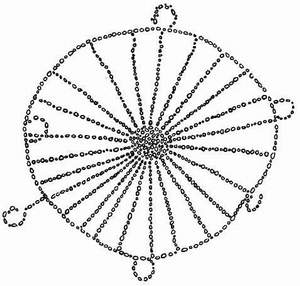
The Wheel of the Year, or Eightfold Wheel, is a magical and spiritual division of the year that may date back to the first agricultural societies. It was formalised by the Celts, although some historians believe that it was predated by an earlier threefold division that celebrated the beginning of winter, mid-winter and midsummer, and was perhaps linked to the movement of the herds.
The Wheel of the Year co-exists with the wider seasonal divisions of the year and incorporates the four solar festivals; these fall on the solstices and the equinoxes, the astronomical marker points of the ebbs and flows of cosmic energies. Between each of these solar festivals, which are known to witches as the Lesser Sabbats, is one of the four great Fire festivals that are major rites in the Wiccan and neo-pagan calendar, as they were to the Celts.
It is interesting to note that the Wheel of the Year is mirrored almost exactly in the Medicine Wheel, or Circle of Power, that is central to all the magick of the Native American Indians. The spokes of the Medicine Wheel link the celestial, human and natural cycles. The Medicine Wheel was made of stones and could be created wherever a tribe camped. Some were 90 feet in diameter, but research suggests that some were much smaller and were placed around ceremonial tepees to be used not only by the shaman but also by anyone seeking a spiritual path. Depicted around the wheels are totem, or power, animals, representing each birth month and season, the four main directions and winds. The totems vary according to each tribe's mythology. There are more than 500 different systems in North America alone.
In the southern hemisphere, as I explained on page 42, practitioners can re-time the magical associations so that, for example, the midwinter solstice falls in mid-June, rather than December. However, some parts of the world do not have four seasons. For example, parts of Australia and other lands in the southern hemisphere have just two, the wet and the dry, and others have three or six seasons. In parts of the US too, there are not such definite seasonal variations, while in Northern areas of Scandinavia and Canada, it may still be snowing and icy on May Day, so the Swedes, for example, have their equivalent of maypole dancing round then: midsummer tree.
In practice, wherever you are, you can either carry out the symbolic rituals at the times I have suggested or adapt them to your own clime. You may, indeed, find that if your ancestors came from another land or continent, your seasonal energies resonate more with theirs. Even if you live in Sydney or Florida, it may be that come November you instinctively hibernate; in this case, you may find the Celtic pattern right for you no matter what the barometer says.
Because the solstices and equinoxes are astronomical measures - that is they depend on the movement of the planets and stars - the dates will vary by a day or two depending on the year.
I have written in several of my books about the folk and religious lore behind seasonal festivals and there are many other good books on this subject. In this chapter I mainly focus on the way they amplify the positive energies of the universe and provide a personal connection to the ebbs and flows of the cosmic cycle of existence. The rituals can be either private or group celebrations of power.
They will also vary because they originate from many different myths, so that different gods and goddesses may appear in a variety of aspects. This may give rise to what seem to be contradictions, but in the coming together of myths this is inevitable and the god and goddess forms are a powerful metaphor for the energies of each era. One theme common to all, however, is the belief in a cycle, or wheel, of birth, maturity, death and rebirth, which underpins nature and, some believe, all creation.
The energies of the eight major festivals of the Eightfold Year reflect global as well as personal concerns, and our ancestors linked their own fortunes with those of the herds, the soil, the trees and the crops. This is a very valid principle of white magick and one that I have returned to many times in this book. If our spells focus, for example, on increasing general abundance at the time of the harvest, our own needs will be met as part of the cosmic process of regeneration.
What is more, the responsibility felt and still expressed in ritual by some indigenous peoples, for the coming of the rains or the annual rebirth of the Sun, is not merely an unlearned response as some anthropologists suggest. It acknowledges the interconnectedness of universal and personal life forces and the responsibility humans have for care of the Earth. As an ancient Malaysian proverb says: 'We have not inherited the Earth from our forefathers, but borrowed it from our descendants'.
Using The Seasons In Magick
You can add extra depth and significance to your rituals by carrying them out using the associated candles, crystals, herbs and incenses when the particular seasonal energies are at their height. Such seasonal empowerments will bring the related qualities into your life, to be stored for times when you need their strengths in your everyday world, perhaps at a time of change or crisis. After a year or so of tuning into the seasonal cycle, you will build up a repository of energies for every occasion, like an inner harvest ready for whenever you need them.
On the other hand, if an urgent need suddenly arises in your life, you can at any time of the year repeat the seasonal ritual most representative of the necessary strengths you require, to amplify the powers within you.
You can enter the Wheel of the Year at any point. Some people begin at the Celtic New Year in November, but it may be easier in modern life to begin as I have with the rituals of the early spring, when stirrings of new life first appear. The Celtic day is calculated from sunset to sunset and so the festivals began on the eve, usually the most important time in the festival, and continued for three days. The first we shall work with is the festival of Imbolc (meaning 'in the belly of the mother', and also known as Oimelc 'ewe's milk').
The Festival Of Imbolc
Time: Sunset 31 January-sunset 2 February (31 July-2 August in the southern hemisphere)
Focus: New growth, melting the ice, bringing light into the darkness, the return of the Maiden Goddess
This was the festival of early spring when ewe's milk was first available after the long, cold winter and the first shoots might be seen in the still-frozen fields. One of the Celtic names for the pagan festival was Brigantia, named after Brighid, the Celtic Triple Goddess, here in her maiden aspect ending the rule of the old hag of winter. She was christianised as St Bridget of Kildare, whose day is 1 February. Brigantia was also the name of a Gallic Earth goddess.
Blazing torches were carried deosil around the still-frozen fields and sacred fires were lit on hilltops to attract the new Sun. It is said that Brighid went around the fields with her white wand of fire, melting the snows and stirring new life, so it is primarily a festival of light. In both pagan and Christian traditions it has involved the lighting of candles and torches, to restore warmth and light into the world.
The maiden goddess Brighid in myth mated with Lugh the young god of light and so, traditionally, a virgin was chosen to mate with the chief of the tribe to ensure the coming of new life to the land. It is said that, like Lugh, he embraced Cailleach, the old hag of winter who was thus transformed in his arms into the Maiden Goddess.
In medieval times, a girl representing Brighid would be brought to the door of the main house or farmstead of a village with cows and a cauldron, symbols of plenty. Her straw bridal bed would be created close to the fire, adorned with ribbons and blessed with honey. Milk, the first available after the winter, was central to the festival as a symbol of renewed fertility. It was poured on the bed of straw. Workers from the farms and villages would approach the bride bed, and in return for a coin, a posy of flowers or tiny gift would receive her kiss, bestowing blessing on their trade and homes.
In churches, the candles that were to be used for the coming year in ceremony were purified on the feast of Candlemas on 1 February. Each person was given a blessed candle that acted as protector of the home against storms, fire and flood and defended cattle and crops against evil.
The energies of this seasonal festival are good for the regeneration of any areas devastated by neglect or pollution, for melting rigid attitudes that may have led to conflicts between counties or ethnic groups, and the isolation and alienation of disadvantaged groups through prejudice. They are especially helpful for the welfare of infants, small children and animals.
On a personal level, these gentle rituals can bring mental, emotional and spiritual regeneration, especially if you have been hurt or lack confidence. If you carry them out, by Easter you will be filled with new optimism and a sense of direction and hopefully any new relationships, whether for love or friendship, initiated at Imbolc will be slowly but gradually developing.
Traditionally, those celebrating this festival would light candles and place them at each window of their houses on 31 January or Candlemas Night, 1 February, and leave them to burn down completely. For safety reasons, nowadays, however, many people use the type of electric candle sets that are popular in windows in Swedish homes before Christmas.
A single, large, white candle was also lit in or near the family hearth as a centrepiece for the family feast on the same evening to welcome back the Maiden energies and to bring blessings on home and family. The traditional Brighid straw and beribboned crosses were woven and passed though the candle flame, thereafter serving as amulets to keep homes, animals and barns from harm. These crosses, whose four arms extend at different points around a square centre, are still dedicated to St Brighid and are still kept in homes for protection.
Associations
As before, if you wish to carry out a similar ritual, choose candles, crystals, incenses, etc. of the correct associations to strengthen your ceremony.
Candle colours: White, cream and pink or any pale colour - these are associated with innocence and gentleness
Crystals: Garnet and bloodstones, also amethysts, rose quartz and gentle moonstones for awakening fertility and feelings
Symbols: Ice, milk, seeds, first snowdrops or very early-budding leaves or flowers
Flowers, herbs, oils and incenses: Angelica, basil, benzoin, celandine, heather and myrrh
A Ritual To Release The Frozen Life Force
Work after dusk on the eve of 31 January or on the following evening, 1 February, and perhaps incorporate the ritual into your Candlemas party. With close supervision, even children can join in the ritual. Place the candles in a deep holders and make the miniature straw bed perhaps in a deep metal bowl or even the family hearth, if it is no longer used for fires.
* On a table, your altar or the hearth, create a small bride bed of straw or dried grasses, decorated with coloured ribbons and any early flowers. Near it place a tiny fabric doll or any small doll to represent the Maiden Goddess.
* Encircle the bed with seeds and newly budding flowers or greenery and behind it, at a safe distance to avoid the danger of fire, place a single, tall, white 'bride' candle.
* On a tray in front of the bride bed, place an earthenware jug of milk, a small dish of honey and a dish containing an ice cube or small amount of ice. Round these, again being careful to avoid fire risk, set a circle of small pink and pastel candles.
* Light first your 'bride' candle, saying:
Bride, bride, enter your bower, your reign begins at this hour.
The old hag her sway is done, winter's gone, new spring has won.
* Place the doll in the bed and then light the candles surrounding the jug deosil, saying:
The maiden's wand of fire does melt the snow, Ice depart and spring flowers grow.
* Drop the ice or ice cubes into the jug of milk, stirring it deosil with a wooden spoon or birch twig, repeating the chant.
* Add a teaspoon of honey to the milk and again stir your jug deosil, saying:
Flow, life anew, through bud and flower, the thrall of winter has no power; Flow, love and joy and growth and light, ice and snow begone from sight.
* Leave the ice to melt while you and any others present can place coins, flowers and ribbons on the bride bed, making wishes for the coming spring, for the land, the creatures, for others and for yourselves.
* When the ice is melted, stir the jug and very carefully pour a single drop on the bride bed, saying;
See, bride, I bring the first milk, symbol of nourishment and fertility, honey from the warm South, heralding fertility and abundance and above all the life force now released that can transform wish into reality and sustain us through the days of cold and wet still to come.
For we have seen the spring and so I send you light, that light may be shed throughout the world.
* Blow your tiny candles out widdershins, naming for each a blessing that you ask for the world.
* Leave the 'bride' candle to burn through and the bride bed in place for the rest of the festival.
If you are working in a coven, you can create a real, full-sized bride bed and choose the youngest member to be the bride. I once carried out the ritual on television, in which all the crew came to kiss the bride, played by Becky, the presenter, and ask her blessing. In spite of their over-enthusiasm and the male presenter Carl's generosity in spreading honey on all who came near, the festival was well and truly a celebration of the return of life.
Ostara, The Spring Equinox
Time: From sunset on or about 20 March for three days (from sunset on or about 21 September in the southern hemisphere)
Focus: The triumph of light over darkness, resurrection, new beginnings and opportunities; spring cleaning and casting out what is no longer of worth; fertility and conception, the winds of change.
At the spring equinox, the Sun rises precisely in the East and sets precisely in the West, giving exactly 12 hours of daylight and so heralds the longer days and shorter nights. As is so often the case, myth and religion are intertwined in the sources of their festivals that share the same dates. In the old Celtic tradition, Lugh, the god of light overcame his twin, the god of darkness, and at Easter, the Christian spring festival most closely associated with the spring equinox, the resurrection of Christ is associated with the restoration of light to the world.
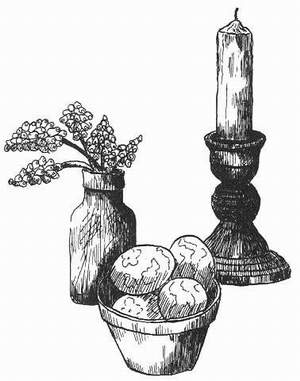
The first eggs of spring were painted and offered on the shrine of Eostre, the Anglo-Saxon goddess of the spring. Her Norse counterpart was Ostara, the maiden aspect of Frigg, the Mother Goddess, to whom the hare was sacred (this is the origin of the Easter rabbit). At the spring equinox, bonfires were lit and the corn dolly of the previous harvest (or in Christian times a Judas figure) was burned on the Easter fires. The ashes were scattered on the field for fertility.
Wake at dawn on Equinox morn or Easter Sunday and, it is said, you can see the Sun or in the Christian tradition, angels, dancing in a stream or river. The Green Man is another central figure that features in rituals at this time in southern and eastern Europe and especially among Romany communities. The Green Man, or Green George, as he is sometimes known, was the spirit of plants, trees and vegetables, fruit and vegetation, the male spring deity, consort of the Earth Mother and an early forerunner of both Robin Hood and St George.
The Mother Goddess in her maiden aspect mated with the ascended Sun God or, in popular folk tradition the Green Man, so that the conceived infant would be reborn as the new Sun at the next winter solstice, thus ensuring the Wheel of the Year continued to turn. In the Christian church, 25 March is the Feast of the Annunciation of the Blessed Virgin Mary when Gabriel told her she was with child.
The energies of this festival are good for cleansing the seas and air of pollution, for new peace-making initiatives of all kinds, for beginning reforestation and regeneration projects, the reclamation of wildlife habitats and work to restore the indigenous trees and wildlife to an area. They will also support major attitude changes towards international, national and local issues.
On a personal level, this is the time for clearing emotional and spiritual clutter and wiping the slate clean; for life changes, new beginnings, sowing the seeds for new projects that will bear fruit in the future, for herb gardening, for all matters of fertility and for putting new ideas into practice. Matters concerning children and young people and new flowering love are specially favoured.
Associations
Candle colours: Yellow and green for the clear light from the East and the budding vegetation
Symbols: Eggs, any spring flowers or leaves in bud, a pot of sprouting seeds, pottery or china rabbits, feathers
Crystals: Aquamarine, jade, tourmaline, fluorite
Flowers, herbs, oils and incenses: Celandine, cinquefoil, crocus, daffodil, honeysuckle, primroses, sage, tansy, thyme and violets
A Spring Equinox Cleaning Ritual
Use this ritual to welcome the winds of positive change. You can perform it on any of the three days of the rising equinox energies that precede the equinox. Alternatively, it can be adapted for cleansing away negativity and sorrows at any time. I give an alternative version in my book Psychic Protection Lifts the Spirit.
You can join with family or friends in a communal spring cleaning of a collective living area or workspace. Alternatively, you can use it alone to help you to clear out not only physical clutter but also emotional and spiritual stagnation in those areas of your life and relationships that would benefit from the winds of change.
This spell is another that I performed on TV and though it involved a lot of laughter and dancing - as all good rituals should - many deep sorrows and anxieties were anonymously placed in the cauldron. Our ancestors probably took such folk magick a lot less seriously and so were able to tune into the natural joyous energies of the season.
Begin your ritual in the morning. Open the windows and doors of the place in which you are carrying out the ritual. Alternatively, work in a yard or on a patio.
* Place your cauldron - a large pot, wide-necked vase or jug will do - on the floor.
* Each of those taking part in the ritual should now write or draw on a piece of paper a representation of every redundant issue or bar to happiness and fulfilment that they wish to blow away on the winds of change.
* Draw a cross through the words or image, then tear it into pieces and drop it in the pot, saying:
It is done, it is gone, no more to trouble me. Banished be.
* When all the papers are in the cauldron, you (or the whole group) tip the paper into the centre of the floor and scatter dried lavender on top, chanting:
Out with sorrow, out with pain, joyous things alone remain.
* Then take your broom, a traditional besom if possible, and hold it horizontally. If you are working with others, everyone should take the brush-head of the person to their right and the broom-handle of the person to the left, holding them horizontally at a comfortable height for all of you.
* Dance nine times deosil round the paper and lavender, swirling faster and faster, and chanting:
Three times three, the power I / we raise,
Bringing with it happier days.
* Then sweep the paper and lavender out of the back door. If you are working out of doors, sweep it through out of the back gate into a gutter (you can clear up afterwards). As you sweep, say:
Dust to dust, away you must. New life bring, welcome spring.
* After the ritual is over, try to leave enough time in the remainder of your day to go to the top of a hill. Take a kite (made from a biodegradable fabric if possible) and in your mind, tie any lingering doubts, fears and concerns to the kite's tail and let it fly away. If you don't have a kite, use a feather for each of your worries and throw them into the air. Hopefully, a child will find the kite, cleansed by the winds, and it will bring joy.
I know of a group of women who carried out a similar sweeping spell in the warehouse where they worked, using wood shavings for the negativity, and then swept out right through the yard into the packing bins which were later taken away by lorry. They commented that afterwards everyone was much more energetic and positive and the internal fighting and backbiting, which had been quite serious, melted away.
A Ritual To Wash Away Negativity
Infusions can be made, using lemon, peppermint, pine or tea tree oil, to wash away negative feelings. Use 12 drops of essential oil to a bucket of hot water. Alternatively, add two peppermint tea bags to a cup of boiling water and leave to infuse for five minutes. Use your essential oil infusion to scrub or mop floors, yards, balconies, doorsteps or patios.
* Work in circles widdershins, saying:
One for joy, two for gladness,
Three and four to banish sadness,
Five and six flee useless anger,
Seven, eight, nine, linger no longer.
Nine, eight, seven, six, five, four, three, two, one,
Darker days now begone.
* Alternatively, strain and use the cooled peppermint liquid to sprinkle around rooms, to inject the freshness of spring emotionally and spiritually.
* Afterwards, place a vase of spring flowers, growing daffodils or hyacinth bulbs on a table in the centre of the room to increase the life force.
Beltain, The Festival Of Fire
This Celtic festival of summer is also called Bel-fire, the festival of Belenus, Celtic god of light.
Time: Sunset 30 April-sunset 2 May (31 October-2 November in the southern hemisphere)
Focus: The fertility of the Earth, creatures, crops, people and animals; the instinctive energies that can be manifest as passion whether in sexual terms or for any cause; the interconnectedness of all existence and the mutual dependency of one life form on another.
Beltain, which has survived as our modern May Day festival, marked the beginning of the Celtic summer when cattle were released from barns and driven between twin fires to cleanse them and to invoke fertility as they were released into the fields.
Sundown on May Eve heralded the signal for Druids to kindle the great Beltain fires from nine different kinds of wood by turning an oaken spindle in an oaken sockets. This was carried out on top of the nearest beacon hill, for example Tara Hill, County Meath, in Ireland, home of the Tuatha de Danaan, the hero gods of old Ireland. Every village would have its Beltain fire, which was attributed with both fertility and healing powers.
Winter was finally dead at midnight on May Eve, when Cailleac Bhuer, the old hag of winter, cast her staff under a holly bush and was turned to stone. She would be restored six months later on Hallowe'en.
Young men and girls made love in the woods and fields on May Eve to bring fertility to the land as well as themselves; they gathered flowers and blossoms from the magical hawthorn tree to decorate houses and to make into may baskets which were left as gifts on doorsteps. This custom lasted well into Victorian times and is recalled in Rudyard Kilping's poem Oak, Ash and Thorn, which begins:
Do not tell the priest our plight,
For he would think it a sin,
For we have been in the woods all night,
Bringing summer in.
This echoes the woodland wedding of the Goddess, the first May Queen, whose name came from Maia, the Greek goddess of flowers, whose festival occurred at this time and who also gave her name to the month of May. She married Jack o' Green, the god of vegetation -another form of the Green Man - and the deity of the green crops as yet unripened. He became Robin Hood to her Maid Marian. Once again, there is also a Christian connection here: the name Marian is a form of the name Mary, and St Bridget was called Mary of the Gaels.
The maypole, which we still recognise today, once symbolised the ancient cosmic tree and was the focus of fertility dances whose origins are unknown. Red, blue, green, yellow and white ribbons, representing the union of Earth and Sky, winter and summer, Water and Fire, were entwined and the spiralling dance stirred up the life force and fertility of the Earth. The maypole formed a central phallic symbol that could be 40 foot high and echoed the rising potency of the Sun, or Corn, God and the growing corn. Fires were lit and it was believed that the height the young men could leap over the fires would indicate the height the corn would grow and, since for safety reasons this deed was performed without clothes, the festival was one of joyous, unbridled sexuality.
In modern times, this festival has a global significance and survival issues are to the fore. These may concern endangered species or the fight for the rights of indigenous peoples, for freedom of speech, action and belief everywhere. Also involved are the struggle to discover more natural forms of medicine and Earth-friendly products with fewer side effects, and all matters of the countryside.
On a personal level, Beltane is a festival potent for fertility magick of all kinds, whether to conceive a child or aid financial or business ventures to bear fruit. It is good for an improvement in health and an increase in energy as the Sun's light and warmth also gain intensity, and for enthusiasm and creative ventures of all kinds. It will assist the consummation of love matches, travel and job moves and all matters concerning young adults, especially those making commitments.
Associations
Candle colours: Dark green, silver and red
Symbols: Fresh greenery, especially hawthorn; any flowers that are native to your region, placed in baskets; dew gathered on May morning (girls should bathe their faces in it), coloured ribbons, twigs from the three trees sacred to the festival (oak, ash and thorn) or any other woods from your own area
Crystals: Clear crystal quartz, golden tiger's eye, rutilated quartz and topaz
Flowers, herbs, oils and incenses: Almond, angelica, ash, cowslip, frankincense, hawthorn, lilac, marigold and roses for love.
A Beltain Ritual For Fertility And Earth Energies
Such a ritual can be used to encourage creativity and growth of all kinds. It may be performed either alone or in a group, with everyone present joining in the chants.
Use as many kinds of wood as possible in the kindling for your fire. Traditionally the magical trees were oak, ash, thorn, willow, birch, rowan, alder, holly and yew, but you can use wood indigenous to your region. An arboretum will offer a variety of fallen twigs.
* Light a small fire. (This may be either a small bonfire out of doors, or a fire in a hearth indoors. Barbecue pits are easily adapted.) If you are working in a group, each person can ignite the fire at a different place. If you cannot light a fire, choose a really large, fat, dark green candle as your focus. Place it on a wide, deep fireproof tray, secured in sand.
* If you are in a group, stand in a circle around it, with each person holding a taper. The first person lights their taper, then the flame is passed from one taper to the next until the person holding the final taper lights the central candle. Each person can say the chant, with one voice after another joining in.
* As you build and light your fire or candle, say:
fire of Bel, fire of the summer Sun and the ascending light, flame in my heart, my soul, my loins, that my life and light maybe kindled and flare upwards to greet the summer Sun.
* Take a twig, if possible oak, ash or thorn, and circle the fire or candle deosil, saying:
fires of healing, fertile fires, bring what is needed, not desired. Heal the planet, bless the corn. Lord of Light, we greet your dawn.
* Carefully light the twig and allow it to smoulder and then hold it momentarily upwards, saying:
fire of Bel, join with my fire and with all fires in all places on this day at this hour, rise in a web of glorious flame to empower the Sun, to be empowered and to flame within my heart forever.
* Cast the twig into the flames, then leap high in the air, crying: Ascend and bring fertility, power and creativity.
I do not suggest you try to emulate our ancestors and leap across the flames, as presumably the casualty rate was horrendously high.
* If you are using a candle, each person can in turn hold the end of the twig in the flame until it smoulders, then rest it on the tray and allow it to burn slowly down or go out.
* End the ritual by taking scarlet ribbons and spiraling round the fire or candle, waving them like flames, as you chant. Finally throw them into the air, away from the flame.
* Allow the fire or candle to burn down. Afterwards, make up small posies of flowers to leave on the doorsteps of people who you know would appreciate them - perhaps the ill or lonely.
Litha, The Summer Solstice
Time: Three days beginning from sunset around 20 June (20 December in the southern hemisphere)
Focus: Full potency, illumination, mysteries revealed; healing, the height of joy, fulfilment, the need to seize the moment.
The summer solstice has been celebrated in cultures as far apart as Russia and North America, where Sun dances were an assertion of power and courage and in a new form still bring healing to the nations and the Earth.
The height of the festival is the first light falling on the morning of the solstice, like a shaft of gold across standing stones and stone circles, linking the dimensions. Many circles throughout Europe and Scandinavia, such as Stonehenge in Wiltshire, are aligned to the summer solstice sunrise, as are a number of stone medicine wheels in America and Canada.
These places, built on centres of great power, have accumulated not only the power of the thousands of midsummer suns that have shone on this day since their creation, but the hopes and prayers of those who have and still gather at such places. These include priests, Druids, healers, warriors, monarchs and ordinary men and women who connect with fusion of Sky and Earth energies, the sacred and ceremonial marriage of god and goddess on this most magical of days.
There is a long-standing pagan tradition of lighting bonfires on beacon hills to strengthen the power of the Sun before it began its decline. On Midsummer Day, fire wheels were rolled down the hillsides, flaming tar barrels were swung on chains and blazing torches tossed in the air. In Sweden, they still hold a midsummer weekend with a midsummer tree, or pole, decorated with greenery and flowers forming the centrepiece of music and revels. There is feasting in towns as well as the countryside in what is a national event and thousands of people gather as they have for centuries at focal points such as the Island of Oland on the Stockholm archipelago.
St John's wort, the golden herb of midsummer and symbol of the summer solstice, was said to offer fertility and powers to attract love if picked at midnight on 23 June, the eve of St John's Day, or the eve of the actual solstice. Hopeful lovers would carry it or place it under a pillow.
The power of the summer solstice can be harnessed for tackling seemingly insoluble problems and bringing light and life and hope to those who are depressed or who have been unable through circumstances such as poverty to fulfil their potential. It can help to tackle global warming, famine and disease, and to prevent oppression of people and cruelty in intensive farming methods where livestock suffer for human greed.
On a personal level, summer solstice rituals are for courage, male potency and fertility, for achievement, success, confidence, health and happiness, for fulfilling potential and providing ever-expanding opportunities both physical, mental and spiritual. These spells are especially potent for maturing adults approaching middle age.
Associations
Candle colours: Gold, orange or red to mirror the Sun at its height
Symbols: Brightly-coloured flowers, oak boughs, golden fern pollen that is said to reveal buried treasure wherever it falls
Crystals: Amber, carnelian, citrine, golden beryl, sunstone
Flowers, herbs, oils and incenses: Chamomile, dill, elder, fennel, frankincense, lavender, St John's wort and vervain
A Summer Solstice Stone Ritual
This ritual can be used to absorb the courage, power and joy of the season. You can carry out this ritual at any time during the three-day period. You might like to perform it at dusk on the eve of the solstice or at one of the other traditional times, such as midnight, the dawn of the solstice day or noon. Alternatively, you may prefer to watch the actual solstice sunrise from a hill or an open place or even close to one of the sacred sites at dawn.
* Take eight large, long, rounded stones, one for each spoke on the Wheel of the Year.
* Arrange them around the edges of a circle. The eight points correspond with the mid-winter solstice in the North, Imbolc in the North-east, the spring equinox in the East, Beltain in the South-east, the summer solstice in the South, Lughnassadh in the South-west, the autumn equinox in the West, and Samhain in the North-west. (In the southern hemisphere, they will all move six months so that the summer solstice is in the North, etc.)
* In front of each stone, place a yellow beeswax or gold candle and set a large gold candle in the centre of the circle. If you have a cauldron or large pot, you can set the central candle in that. Surround the central candle with flowers and herbs of midsummer, if possible freshly picked from an outside source, and any greenery.
* If you are working in a group, members can stand around the circle, one at each of the points of the year, with the rest of the coven standing in the North, in a line, facing the South. If you are alone, you may wish to adapt the ritual so the stones and candles are smaller. Place the central candle on your altar, which will on this occasion be standing in the North, facing the South, and move round the altar in a circle.
* Enter the circle at the mid-winter solstice (North), the position of the birth of the Sun, and light the central candle, saying:
Sun, sacred centre of warmth, light, light and fertility, I greet you on this your time of glory.
* Behind the candle, light a semicircle of frankincense sticks, saying:
Sun who has been from the beginning, King, God, Father, orb of inspiration, I greet you now at this your time of glory.
* Face the North and light the mid-winter candle, saying:
The Sun is born anew, see light grows, light flames to illuminate the darkness and promises renewal as the Wheel turns too.
* Move round the Wheel to face the North-east. Light the Imbolc candle, saying:
The Sun increases and the maiden flames the white fields. You claim her as your own and so the year turns and life and light wax as day returns.
* Move next to the East and, facing this direction, light the spring equinox candle, saying:
Once more you overcome the darkness; the throne of light is yours to ascend and longer days are won.
* Move to the South-east and, facing this direction, light the Beltain candle, saying:
Your warmth brings green growth once more to the barren Earth. I kindle fires to draw your healing strength and the corn will grow high.
* Move to the South, face the direction of the summer solstice, light the candle and say:
The Sun is at its height and all nature filled with power. The Lord and Lady of the Universe, Sky and Earth, are joined on this day.
* Around the summer solstice candle, scatter a circle of dried or fresh dill, St John's wort, vervain and clover (trefoil) - these are the herbs that bloom at this time and were used to exorcise harm and bring protection to home and people. If you cannot get any of them, use rosemary or any of the herbs of the Sun.
* As you scatter the herbs, say one of the variations of the old midsummer chant that can be found in folk legend in Europe. My favourite is:
Trefoil, vervain, John's wort, dill,
Drive off darkness at your will.
Trefoil, vervain, John's wort, dill,
May the summer sunshine fill
All with life and hope - and keep
Hearth and home safe while I sleep.
Scoop up some of the herbs in a tiny purse or drawstring bag. Keep it and place it beneath your pillow before sleep. You will, it is said, dream of the person who can make you happy and also, if you add some golden pollen to the sachet, of ways of increasing your wealth.
* Light the final three candles in turn, saying:
Wheel turn, though light from henceforth falls,
Turn year, till spring and new life calls.
* Leave your solstice wheel of candles to burn down.
* The following day, when daylight comes again, plant golden flowers and spend the day in the open air if at all possible, enjoying every moment of light until you witness the Sun setting in the West.
Lughnassadh, The Festival Of The Corn Harvest
This festival accords with many of Wiccan principles, especially the Threefold Law.
Time: Sunset 31 July-sunset 2 August (31 January-2 February in the southern hemisphere)
Focus: Willing sacrifice for the greater good, natural justice and karma, trusting the cosmos to provide by giving without seeking immediate return; also spiritual transformation, renewal of the life force by absorbing the powers of the spirit of the corn through food and drink.
This is the festival of the corn harvest, called Lammas or Loafmass, when on 1 August the first loaf is baked from the harvested wheat. It corresponds to the Christian harvest festival when in some churches corn is still offered on the altar, but the concept of offering up the first fruits to the deities in return for abundance throughout the year is a very ancient one.
The Lammas loaf, made in the pagan tradition from the last sheaf of corn to be cut down, was regarded as sacred by very early agricultural societies onwards. Before Christian times, it was believed to contain the spirit of the corn; the barley fermented by the autumn equinox was the blood of the Corn God, or the spirit of the crops, who in popular folk song was called John Barleycorn. This is probably the origin of the Wiccan cakes and ale ceremony. This last sheaf was cut by a number of people casting their sickles simultaneously, so no one would know who killed the Corn God, though he offered himself willingly so that there would be abundant future harvests.
As well as being used to make the harvest loaf, some of the corn was woven into corn dollies, symbol of the Earth Mother, decorated with the scarlet ribbons of Frigg, the Norse Mother Goddess. These corn dollies would be hung over domestic hearths throughout winter. Some were made into the shape of a Corn Mother or a cornucopia, or horn of plenty, and others were tied into knots that bound in the power and protection. This art continues today in rural places.
The old name for this month in the Celtic Coligny calendar was Claim-time, when debts would be collected and contracts were arranged. Trial marriages for a year and a day were frequently set up at Lammas, by young couples simply joining hands through a holed stone - they could renew the contract annually if they wished.
Lammas evolved over the centuries into an occasion for craft fairs and festivals, with people travelling from miles around to sell their wares. There were also parades by the trade guilds, and hiring fairs where workers were found to help in the fields for the summer weeks.
Nowadays, the festival energies are good for fighting injustice for oppressed people or creatures, especially for making sure that workers in Third World countries are not exploited financially; for teaching new skills so that people in poor lands and deprived areas may have a chance to create their own prosperity, and for all acts of unpublicised charity.
On a personal level, Lughnassadh is potent for rituals concerning justice, rights, contracts, business affairs, regularising finances and seeking advancement in career; for personal and legal commitments and partnerships of all kinds; also for learning new skills and trades and for mature people in their forties and fifties.
Associations
Candle colours: Dark orange and yellow candles, to reflect the coming of autumn, and purple for justice
Symbols: Ears of corn, corn dollies, anything made of straw; bread, cereals of all kinds
Crystals: Brown agate, desert rose, fossilised wood, leopardskin jasper
Flowers, herbs, oils and incenses: Cedarwood, cornflowers, Chamomile, cinnamon, fenugreek, ginger, myrtle, rosewood and sunflowers
A Lughnassadh Ritual For Renewing The Sacred Exchange With The Earth
You can work around dusk, either alone or in a group or perhaps invite a friend or family member to share the ritual.
* Bake or buy a round loaf of wholegrain bread and a small bottle of barley wine, organic ale or a fresh fruit juice.
* Place the bread in a straw basket and surround it with ears of grain or dried grasses and pour the wine, ale or juice into a pottery jug.
* Light first a large, orange candle on a very large, fireproof tray and place it so that light falls on the food and drink.
* Burn gentle Chamomile, Cedarwood or rosewood oil or incense, saying:
Spirit of the corn, I thank you for your bounty for giving your life for the life of the land and the people. I offer in return my crafts and skills.
* Take an ear of grain, straw, or a dried grass and pass it through the oil vapour or incense smoke and then begin to weave a knot, saying:
I offer ... [make a pledge, however small, of some way you can use your abilities for the good of the family/workplace/community or any project dear to your heart].
* Now take a second grass and pass it through the candle flame, then weave it into the first, forming a second knot, this time asking for something you or your loved ones need.
* Place your miniature corn knot in a straw basket, continuing to make a double knot of pledges and needs, until you have exhausted your ingenuity. Pass each through the incense and the candle. (If you are working with others you can take it in turns to make and name your corn knots and place them in the basket. If you have a joint goal as a coven, you can work on a large knot to represent the collective energies and needs, by making individual knots and binding them together with red ribbon.)
* Then take the bread and raise it above the candle, saying:
I give thanks for this the willing gift and offer the first fruits to the Earth Mother who transforms and restores all in the ever-turning Wheel.
* Crumble some bread either on to the ground if you are working out of doors or into a large wooden or ceramic dish.
* Break the bread in its dish and offer it to anyone present before eating yourself.
* Take the wine or ale and raise it above the candle, saying:
We give thanks and offer this free-flowing life force to the Earth Mother who reforms and renews all in the ever-turning circle of the year.
* Pour some of the wine either on to the ground or into the dish with the crumbled bread and pour the wine into a glass. (If you are working in a group, pour it into individual glasses and hand them round before serving yourself.)
* After drinking, blow out the candle and say as a rising chorus:
Power to the Sun.
* On the final word, blow out the candle.
* Bury your crumbled bread and wine in a hole in the garden or a large plant pot, saying:
Grow anew, come forth in the spring and keep your promise as I will mine.
* If you poured the offerings directly on to the ground, plant flowers close by.
Keep your dish of knots. Take them out one by one and as you fulfil your pledges cast each into flowing water or from the top of a hill on a very windy day. Before long, your needs should be met, in a way that should bring you new opportunities, though perhaps not exactly as you planned.
Mabon, The Autumn Equinox
Time: For three days from sunset on or around 21 September (21 March in the southern hemisphere)
Focus: A time of abundance, reaping the bounty of the Earth and of celebration for life and its gifts; welcoming the waning, darker part of the year, the god in the Underworld or within the womb of the Earth Mother; for letting go and if necessary grieving for what is not fulfilled
The autumn equinox, or time of gathering, was traditionally celebrated as the wild or green harvest, a time of celebration for the fruits and vegetables of the earth and the Earth Mother. This equinox is the second time of the balance between day and night in the Wheel of the Year, and sees Lugh, the god of light, defeated by his twin and alter-ego, Goronwy, the god of darkness. Goronwy was associated with the Horned God as Lugh was with the Green Man, god of vegetation.
Mabon, or Maponus, was another form of Lugh, and was regarded as the son of the Earth Mother and known as the liberator-prisoner. The Corn God lies fallow in the womb of the Mother. But because his sacrifice was willing, Death has no dominion over him and he grows stronger.
This is the time of the second harvest of vegetables, fruit and remaining crops, the harvest home that pre-dates Christianity. On the day when equal night and day heralded winter, the feast formed a sympathetic magical gesture to ensure that there would be enough food during the winter, by displaying and then eating in celebration the finest fruits of the harvest. Druids traditionally climb to the top of a hill to take leave of the summer Sun as the nights will get longer. Michaelmas, the day of St Michael, the Archangel of the Sun, is celebrated on 29 September. St Michael was patron saint of high places and replaced the pagan Sun deities in Christianity.
Today, global rituals concentrate on positive steps to ensure enough food, shelter and resources for vulnerable communities and individuals, relief of flood and famine, protection of endangered water creatures, dolphin, whales and fish whose death involves great suffering; they also look for peace especially where initiatives are already in motion.
On a personal level, autumn equinox rituals are potent for the completion of tasks, for abundance in all aspects of your life, including security for the future which may involve issues of employment or the need to consolidate finances; reconciliation, the setting down of unresolved anger and quarrels; all matters concerning retirement and older people, especially those who are turning their experience to new fields; the resolution of chronic health problems and all Water magick.
Associations
Candle colours: Blue for the autumn rain and green for the Earth Mother
Symbols: Ripe fruit and vegetables, autumn leaves, berries and nuts
Crystals: Blue lace agate, aventurine, malachite, laboradite
Flowers, herbs, oils and incenses: Chrysanthemum, geranium, lemon, parsley, pine, sage and Solomon's seal
A Falling Leaf Ritual
This ritual of the autumn equinox may be performed to shed fears and regrets and welcome the coming of winter. Anyone who has seen a profusion of swirling brilliant red, yellow, orange and vibrant brown leaves will understand that this is a time of great energy as the light battles but finally submits to the darker days.
As the winds blew at the spring equinox, bringing new life, now they and the autumn rains carry away all that is fulfilled and unfulfilled, leaving room for the quieter contemplation of a time when the Sun still shines and the fruits of the harvest are all around. In this way we can say goodbye to the summer with joy.
* Collect a basket of autumn leaves or any dying greenery and surround it with the fruits, vegetables, seeds, and nuts of the harvest.
* Place blue and green candles alternately at the four quarters, beginning with green in the West, marking out a square that holds both the joys and sorrows of the year that has passed. Make the square large enough so you can work within it.
* Light first the blue candle of the North, followed by the green candle in the East and the blue candle in the South, saying:
The light is born, increases, flames and flares, and with it our lives increase, intensify, we plough and plant, create and tend, travel far and seek our destinies.
* Light finally the green candle of autumn and the West, the Celtic direction of endings and the direction of the Otherworld, to which souls go for rest and regeneration, saying:
The harvest is gathered and the fruits of our endeavours made great by the bounty of Mother Nature.
* Take now a large bowl (or your cauldron) filled with water and place it to the West of the leaves and the circle of the harvest fruits.
* Take a leaf to symbolise an ending, an unfulfilled hope or plan and another for one that was achieved or a problem now resolved; name first the sorrow and then the gain and drop the leaves into the bowl of water, saying:
What is lost and what is gained are balanced and one and the same, as the waters of life flow on.
* Eat a nut or seed or a sliver of fruit, saying:
I take with thanks the abundance of the harvest and I bid farewell to the summer with joy and not with sadness.
* Continue to name and float leaves and eat nuts and seeds until your repository of regrets is empty.
* Move the candles closer to the container of water and look into the water and see, either in your mind's vision, or on the surface images in the light and shadows. If you wish, drop blue and green wax from the candles on to the surface of the water to create images that may suggest ways in which you can make the darker days ahead rich and fulfilling.
* When next you go out of doors, scatter your unused leaves into the air, saying:
Fly free, fly joyous, not in sorrow, to return renewed in the spring.
Use the remaining fruit and vegetables for a meal for family and friends.
Samhain, The Festival Of Wisdom
Time: Sunset 31 October-sunset 2 November (30 April-2 May in the southern hemisphere)
Focus: Ancient wisdom, moving between the dimensions, the intersection between past and future and so a present that is not limited by time and space; welcoming the ancestors, confronting and overcoming fears of ageing and mortality
This festival, recalled in the modern world as Hallowe'en, or All Hallows Eve, marked the beginning of the Celtic year that officially began at sunset on 1 November. It was an occasion for welcoming home family ghosts to the family hearth where their favourite food would be left. This custom continues today in Mexico and to some extent in strongly Catholic countries, such as France and Spain, and in France, All Saints' Day, 1 November, is a public holiday.
In earlier times people in many lands would put garlic on West-facing windows and open the shutters to allow the good family dead to enter It was also the time when the cattle were brought from the hills for the winter and either put in byres or slaughtered for meat, having been driven between twin fires to purify them. These fires also served to drive away bad spirits who were believed to lurk at the transition of the year. Food was stored for the winter and so it is a time of housekeeping, spiritually as well as physically and mentally.
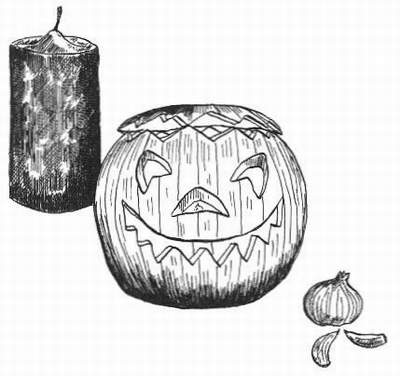
Fears of the unknown and evil have become focused around this festival: our ancestors projected their anxieties on to bad witches and malevolent faeries who might be kept away by a Jack o' Lantern, a candle in a pumpkin or turnip. The name derives from a legendary Jack who escaped from Hell and was ever after forced to walk in limbo carrying a hot coal.
In the myth of the Wheel of the Year, the descended god now guards the gate to the Otherworld and on this festival he holds sway. In some myths, the Goddess enters the Underworld to be reunited with him and returns to Earth on the third day to prepare for the birth of the new Sun, the ascended god, at mid-winter.
The year too is dying and will be also reborn on the mid-winter solstice, so there is a cross-over of energies as the new year begins on the wane of the tide at a period of decline and darkness. Just as the Celtic day began at sunset, with the darkest part of the night still to come, the Celtic year begins in darkness.
This is a time for charities and initiatives to aid the family, the elderly, the sick and dying, to encourage experience to be valued in a culture that worships youth; also for the preservation of ancient sacred sites and the cultural heritage of the world, including the wisdom of indigenous peoples.
On a personal level, rituals are potent for family concerns, especially those about older members of the family or any who are sick or need constant care; for psychic protection, overcoming fears, for laying old ghosts, psychological as well as psychic, and for marking the natural transition between one stage of life and the next, for remembering the family dead and linking the young to the traditions of the past; also for increasing divinatory skills.
Associations
Candle colours: Black, navy blue or deep purple, for letting go of fear, and orange for the joy of immortality that is promised at this time
Symbols: The pumpkin, or Jack o' Lantern, apples - these are symbols of health and feature in Hallowe'en love divination, a custom dating from Druidic times - photographs and journals of deceased family members, to form a focus for happy memories, favourite foods, flowers and symbols of deceased relatives
Crystals: Smoky quartz, apache tears (obsidian), very dark amethysts, boji stones
Flowers, herbs, oils and incenses: Any seasonal yellow flowers -Mexicans scatter yellow flowers from the cemeteries to the homes on 1 and 2 November, their Days of the Dead - cypress, dittany, garlic, marjoram, mugwort, nutmeg, rue
A Samhain Ritual To Move Beyond The Constraints Of Linear Time
Unusually, this is a solitary ritual, so that you can make connection with your personal ancestors, though you may wish to share it with close family members. Perform it on Hallowe'en Eve, as it gets dark.
* Light an orange candle.
* Cut the top off a pumpkin or large turnip, to make a lid, and scrape out the inside and place the flesh in a bowl in front of the candle.
* When the skin is quite empty, do not draw a scary face with grinning teeth, but instead make eight large, regular, round holes in it to let in the light.
* Place a small, orange nightlight or tiny candle inside and leave off the lid.
Beginning anywhere in the circle of holes, look into each hole in turn, asking a question about your future life path and saying:
Jack o' Lantern burning bright,
let me pass through time this night,
Seeing not a future set,
but possibilities that yet
I can seize as paths unfold,
Jack, guide me to new joys untold.
* Shut your eyes, open them, blink and write down the first image that comes either in your mind's eye or in the circle of light.
* Continue until you have explored each of the eight windows of the future and have eight images. You can either interpret the images as referring to the eight time points of the Wheel of the Year, beginning with Samhain, or integrate them into a story about eight steps on your unfolding path throughout the coming year.
* Cook and eat the pumpkin or turnip flesh to absorb the magic.
* Leave the candle to burn down as you make plans for the future.
Alban Arthuran, The Mid-Winter Solstice
Time: For three days from sunset on or around 20 December (20 June in the southern hemisphere)
Focus: Rebirth, the return of light, the triumph of life over death, spiritual awakening, light in the midst of darkness, faith that the Wheel will turn and the life cycle begin anew.
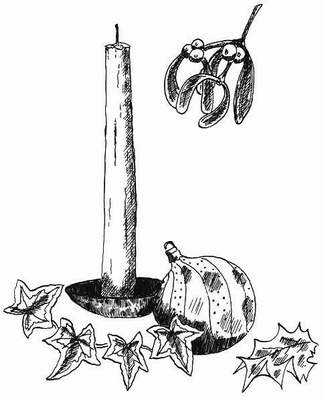
The mid-winter solstice pre-dates organised religion. When early humans saw the Sun at its lowest point and the vegetation dead or dying, they feared that light and life would never return. So they lit great bonfires from yule logs, hung torches from trees and decorated caves and homes with evergreens to persuade the other trees to grow again. So this really is a time of faith and hope and also an awareness once more of the responsibility of individuals to ensure by ritual and by giving hospitality to family, neighbours and strangers that at this lowest point (the yoke or yule of the year) life would be rekindled. This is a long way from the present commercial and consumer emphasis that has overtaken our Christian festival of Christmas.
The name Alban Arthuran means 'light of Arthur', named after King Arthur who in legend bore the title Sun King. His round table represented the great solar Wheel of the Year.
The common theme of the festival that spans many ages and cultures is that the Mother Goddess, under one of her many names, gives birth to the Sun itself, the Sun God. It is the same theme as the Virgin Mary giving birth to the Son of God in a cave or stable at the darkest hour of the year. The virgin birth features in several cultures and traditionally a candle (or other flame) is left burning all night on this longest of nights, to persuade the newborn Sun to rise again on Christmas Eve to light Mary on her way. The feasting of Christmas was another magical gesture to ensure there would be food again in the spring and good harvests the following year.
Globally, this is a time for rituals of renewed faith in the face of despair and cynicism; for work to provide homes and shelter for people, birds and animals, more efficient and humane welfare services; the regeneration of famine or war-torn lands; rekindling goodness even in wrongdoers, improving conditions in all institutions; also individual charitable endeavours.
On a personal level, the mid-winter solstice is a good time for matters concerning the home and practical family matters, for money spells as well as abundance in less material ways; for relieving depression and anxieties for all matters where improvement, relief or success will come after patience and perseverance; also potent for rituals concerning the very old, unborn children, mothers-to-be, nursing or new mothers and newborn infants.
Associations
Candle colours: White, scarlet, brilliant green and gold
Symbols: Evergreens, Christmas trees adorned with lights, oak, ash or pine, brightly coloured baubles, gold, holly, ivy and mistletoe, nuts
Crystals: Any precious stones, especially rubies, diamonds and emeralds, amazonite, garnets, zircons, spinels; you can also substitute glass nuggets in rich red, green and white
Flowers, herbs, oils and incenses: Bay, cedar, holly, jumper, mistletoe, orange, rosemary, and frankincense and myrrh in golden-coloured holders
A Mid-Winter Ritual To Celebrate The Rebirth Of The Sun
This ritual should be performed on the solstice eve. To prepare, decorate a bough of evergreen with red and gold baubles and bows of ribbon and surround it with a circle of five long-burning, pure white candles or a single candle with five wicks. The first candle will need to burn for 24 hours, the second for about 18 hours, the third about 12 hours, the fourth and fifth for shorter periods, although you can always replace a candle by lighting another.
We are keeping to the Celtic time and so our ritual will end with the beginning of the new day at sunset on the actual day of the solstice.
However, if you prefer, you can celebrate 24 hours later or at a weekend where you can be at home for a longer period. Some families move the ritual to the Christian festival and begin on Christmas Eve. Alternatively, you can work for a shorter period, combining the stages and using fewer candles.
This is a ritual you can share with family and friends or with your coven, or practise alone, as an antidote to the bustle and sometimes frayed tempers of Christmas.
* Just before dusk, extinguish all lights except a tiny one so you can see what you are doing, saying:
The light is gone from the old Sun, but we know it will return, pure and true, and with it the rebirth of our hopes.
* Sit for a few minutes in the darkness, avoiding conscious thought, merging with the energies.
* At dusk, light your first white candle, saying:
The light returns; we offer our light to join with those kindled around the world that the darkness may be no more.
* Leave the candle burning and spend an evening away from all the frantic preparations that will be there tomorrow; share a meal, listen to seasonal music, talk about Christmas past, its highlights and disasters.
* When it is midnight or just before you are ready to go to bed, light the next candle, saying:
The light increases, as the new Sun streams forth within the cave, soon to herald the new day; we offer this light, joining with our ancestors and those as yet unborn to call forth radiance.
* Leave the candles in a safe place and when you awaken, even if it is not fully day, light the third candle, replacing and re-lighting the others if they are almost burned down, saying:
The Sun comes forth from the cave, in joy and glory and promise; we join our light with the rays of the new morning.
* Spend the morning out of doors, if possible, collecting greenery, or making tiny clay figures of the Nativity figures, santons as they are called in France, to create a personalised nativity, including figures to represent your family and friends.
* At noon, light the fourth candle, again after replacing any that are burned through, saying:
I rejoice that the light surrounds us; the Sun lives and thrives and multiplies in a thousand cascading sunbeams.
* If possible, enjoy a festive meal with family and friends and make a phone call or perhaps take a small present to someone who is alone at Christmas and might appreciate a visit; if they will not be offended, invite them to join your family table.
* Finally at dusk, light the last candle, saying:
Ever burn bright and warm on fields and sea and sky and all the creatures born of the Mother. We give thanks.
* At bedtime, extinguish your remaining candles, making wishes and saying:
Go in happiness, bring joy and peace and plenty to all in need. Blessings on this Yule and on you all.

