4 - Gods and Goddesses
The Mechanics Of Witchcraft
Magick takes place at what TS Eliot in The Four Quartets called the 'still point of the turning world', that moment of timelessness that enables thought to be turned into reality on the material plane.
It operates on the principle As above, so below'. This phrase comes from the beginning of The Emerald Tablet, attributed to Hermes Trismesgistos (thrice-blessed Hermes), thought to be a powerful first-century Egyptian sorcerer who became worshipped as a god after his death.
This tablet is said to contain all magical knowledge as well as the principles of alchemy, and states that human action and events reflect what occurs in the heavens. And so by releasing magical intentions into the cosmos, as I said earlier, they will be reflected back as actuality.
Since time immemorial, humans have called upon the power of higher beings to help them, whether it be to deliver them from enemies, to bring rain for their crops or to cure their children's illnesses. Every religion and every culture believes in a divinity of some sort, whether it be god, goddess or spirit, good or evil.
Evocations were performed by medieval practitioners of magick to summon up angels (and sometimes demons) and bind them to perform tasks, rather like the Middle Eastern djinn, or genie, who, in faerie tales, would appear from a magick lamp or corked bottle and grant wishes. Incense would be used to give substance to the etheric form of the angel or demon concerned. (Modem magick tends to be a little wary of calling up spirits, however, whose malevolent energies may cause harm.)
In contrast, invocations were used to endow the practitioner with the power to carry out magical purposes through a form of possession, with the angel or god acting directly from within the practitioner's body.
Elementals have also been associated for hundreds of years with more formal magical traditions. Elementals, rather than having a permanent form themselves, are the forces or energies that give shape to living things. They also bring thoughts and desires into actuality, invoked by symbols.
Thus medieval occultists sought mastery over the elemental beings that they fashioned by their incantations. Sometimes, if practitioners used the elemental forces for negative purposes, they would create a tulpa, or thought form, that became an elemental demon. This was hard to banish, even though the magicians worked within a square enclosed by two magick circles -hence the origins of warnings about magical effects coming back threefold.
The Goddess And The Horned God In Wicca
Neither evocation nor invocation is part of modern witchcraft, however, and white witches do not recognise any demonic figures in their religion. When we refer to the Goddess and her son-consort, the Horned God of Wicca, we are referring to the archetype or source energies of the feminine and masculine aspects of ultimate power. They are the creative female and male principles, acting not in opposition to each other but as complementary and necessary parts of a whole. All the named goddesses and gods in witchcraft represent the different qualities of these supreme forms, for example the goddesses of the hunt, or specific forms in different cultures.
There are, of course, variations within Wicca; some traditions emphasise the importance of the Goddess, while others regard the Horned God as her equal, with each assuming different aspects according to the season and ritual. For example, the Goddess may appear as the Earth or Moon deity, and her male counterpart as the Corn God or the Sun.
Reaching Gods And Goddesses In Trance
Modern Wiccans call into themselves the energies of the Goddess to amplify their own innate divine spark and at times may work in a deep trance, uttering words of prophecy or profound teaching. This is said to increase the power entering the body, like turning up the current from a power source. But until you have practised magick for many years, I would advocate working only in light trance and then only in the controlled situation of a very spiritual group. You can think of this as opening a channel between your own higher energies and the Goddess or powers of light.
I said just now that the power of a trance can be compared to an electric current. The analogy can be taken further: just as sending a sudden surge of electricity can cause a power failure, deliberately inducing a deep trance can be dangerous. Those who use drugs to induce such experiences are, in my opinion, playing with fire and may in fact be blocking their innate wisdom in return for an artificial mind-bending experience.
Most people quite rightly shy away from the idea of possession by a force, however benign, preferring to work with the energies indirectly - and this is what I believe is safest and most effective. For even if you are working with an experienced group in healing magick and do want to allow power of light or the Goddess to manifest in you directly, it is pretty heady stuff. So go cautiously, work only in the most positive of minds for the good of all, and for trance work have other experienced witches or mediums to guide you and help you to centre.
The gods themselves can offer protection when you are performing rituals. In formal magick, the Guardians, or Devic Lords of the Watchtower, are invited to guard the four directions of a magical circle. The term deva in Sanskrit means 'shining one', and the Devas represent the higher forms, akin to angels, who watch and direct the natural world.
They communicate with people by psychic 'chanelling' and rule over the beings associated with the four elements, Fire, Air, Water and Earth. In less formal practices, either archangels or pillars of light may be visualised in the corners of the room to offer protection at a time when a person is opening then-psyche to the cosmos, to keep out all negativity, earthly or otherwise. But the greatest protection is a pure heart and pure intent, much harder to attain than learning any complex ritual.
The Goddess as Focus
Many beliefs emphasise the polarity of the female/male, Goddess/god and anima/animus energies. The bringing together of these two powers, the Sacred Marriage that is celebrated symbolically in the Great Rite of the union of Earth and Sky, is a ritual that permeates all cultures.
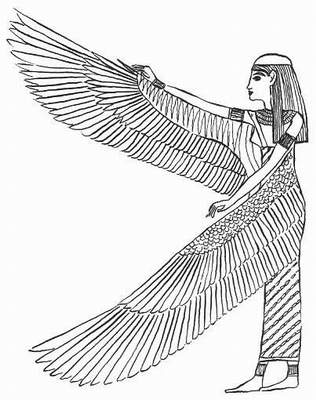
In Egyptian mythology, Isis, the sister-wife of Osiris, sought and reassembled his body after his murder and dismemberment by his brother Seth. In this connection, she took on the role of the goddess of rebirth, the Bone Goddess, and restored him in a more evolved form. The annual celebrations of this event coincided with the rising of the dog star, Sirius, which heralded the flooding of the Nile and the restoration of fertility to the land and symbolically to the people.
As the Sky Gods gained supremacy, they married the Earth Goddesses who slowly evolved into patronesses of women, marriage and childbirth. So, for example, Odin the Norse All-Father married Frigg, goddess of women, marriage and motherhood.
But in witchcraft, though the Sky Fathers and their wives are used for the focus of specific rites, the Goddess retains the earlier form as the creative principle. As the Triple Goddess - maiden, mother and wise woman or crone - she is frequently central to coven work.
Generally in magick the Goddess is recognised as the prime mover of existence, bringing forth from herself in the first virgin birth the animus, or male, principle. For this reason, it is often the High Priestess who casts the circle, though in some covens the Goddess rules over the spring and summer and the Horned God over the autumn and winter.
Other Gods And Goddesses
There is a vast selection of gods and goddesses from many different cultures that you may choose to form a focus for particular energies in rituals. I have given a list of these later in this chapter, but I have not given much detailed description, as it is important we create our own deity images. There are many excellent sites on the Internet, illustrated with paintings and statues of the deities, where you can read their mythical stories.
Because the deities come from so many cultures and times, it is important to invoke only the positive qualities you need and to remember that some did reflect dark as well as benign aspects of divinity. For example, Diana, the goddess of the Moon and the hunt, is thought by most to be a sympathetic soul; but you might be surprised to learn that she would, according to myth, have her rejected lovers torn apart by her hounds. So, when setting up your icons, read about them first, and decide which are the attributes that will assist your magical workings. Some deities fit into more than one category, so I have listed them under their most significant one.
Deities Of Love And Passion
Aphrodite
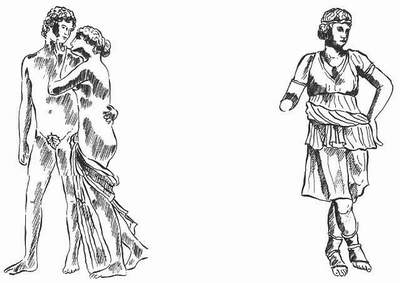
Aphrodite is the Cretan and Greek goddess of love and beauty. Her name means 'born from the foam'. She can be invoked for the gentle attraction of new love as well as for sexuality and passion (hence the term 'aphrodisiac'). Aphrodite is especially potent in candle and mirror spells, romance and for love rituals involving the sea.
Artemis
Artemis is the twin sister of Apollo, the young Greek Sun God, and is goddess of chastity, virginity, the hunt, the Moon and nature. Although a virgin goddess, she also presides over childbirth. Because of her connection with the hunt, she is altogether a more active goddess than Aphrodite if you are seeking love or, perhaps, trying to encourage a reluctant lover of either sex or win love under difficult circumstances. She is perfect for outdoor love spells and for casting your love net wide to attract an as yet unknown lover.
Freyja
Freyja is the Viking goddess of love and sexuality and can be invoked for rituals to increase confidence in inner beauty and worth, for the increase of passion and for fertility in every aspect. A witch goddess, she is potent for all magick, especially astral projection and crystal and gem magick.
Venus
Venus, the goddess of love, is the Roman form of Aphrodite and by her liaison with Mercury gave birth to Cupid. Although she had many lovers, she was the goddess of chastity in women and is a joy-bringer, and so represents not only sexual pleasure, but also innocent love and especially love in the springtime. Her planetary associations mean she is the focus in all kinds of love rituals. As the evening star, Venus takes on a warrior aspect and so can be invoked in fighting for one's lover or tough love in relationships.
Deities For Power
These deities may be invoked for strength, success, energy, inspiration and increase.
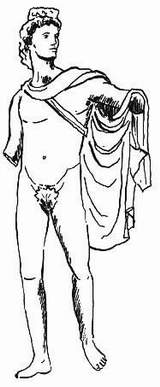
Apollo
Apollo, the Greek Sun God, was twin brother of Artemis, the Moon Goddess. As god of the solar light, Apollo made the fruits of the Earth ripen, and at Delos and Delphi where he slew Python, the first crops were dedicated to him.
(Python, the great lightning serpent, was the son-consort of the Mother Goddess in her form of Delphyne, the Womb of Creation, fertilised by Python. Python in this sense predated all other gods and was later called the Dark Sun, Apollo's alter ego. The Ancient Greeks rededicated his shrine to Apollo.)
Apollo was god of prophecy as well as music, poetry, archery, healing and divination. He is very strongly animus and is good for all rituals of power, ambition and inspiration, as well as those areas under his patronage. Men tend to work better with him than women.
Aine
Aine is daughter of Manananann, Celtic Sea God and ruler of the Isle of Man and goddess of the cycles of the solar and lunar year. Even during the twentieth century, she was remembered on the Hill of Aine in Ireland, by torchlight processions and burning straw at midsummer and also at the old corn harvest, Lughnassadh, at the beginning of August. She is also linked with love, fertility and healing.
Ama-terasu Omikami
Ama-terasu Omikami is the Ancient Japanese Sun Goddess. Her name means 'Great August Spirit Shining in Heaven' but she is also called Shinmet, 'Divine Radiance' and O-hiru-me-no-muchi, 'Great Female Possessor of Noon'.
She is good for female-focused Sun rituals and for ceremonial magick.
Helios
The Greek god Helios, known to the Romans as Sol, was regarded as the Sun itself. He ascended the heavens in a chariot drawn by winged snow-white horses to give light and in the evening descended into the ocean. Homer wrote:
'Drawn in his swift chariot, he sheds light on gods and men alike; the formidable flash of his eyes pierces his golden helmet, sparkling rays glint from his breast and his brilliant helmet gives forth a dazzling splendour. His body is draped in shining gauze, whipped by the wind.'
He is especially associated with the life force and renewing health and energy.
Horus
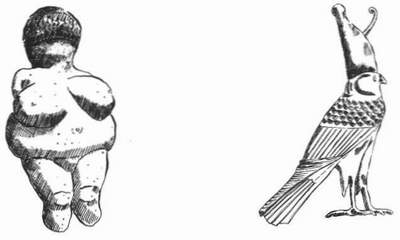
Horus was the Ancient Egyptian Sky God, represented as a falcon or a falcon-headed man. His eyes were the Sun and Moon and his wings could extend across the entire heavens. He was frequently associated with the morning aspect of Ra, the Sun God, and worshipped as Re-Harakhte. The son of Isis and Osiris, he is often depicted as an infant on his mother's lap and together the parents and child form a trinity.
Horus brings clarity of mind and purpose and the ability to seize upon an opportunity, and is effective for uncovering secrets, deception and illusion.
Lugh
Lugh, the Celtic 'shining one', who gives his name to Lughnassadh, Celtic festival of the first harvest, was the young solar deity who replaced the Dagda, father of the gods, as supreme king. He was associated with sacrifice, as the Sun King who was reborn each year at either the mid-winter solstice or the spring equinox.
Legend has it that when Lugh arrived to join the Tuatha de Danaan, he went to the palace of Tara and asked for a position in the court. (The Tuatha de Danaan were the ancient Irish gods and goddesses, literally 'the tribe of Danu', who was the creatrix goddess.) He said he was a carpenter, but was told that the company of gods already had one.
Lugh then declared he was a smith but again was told that the deities possessed such a craftsman. He then announced that he was a poet, then in turn a warrior, historian, hero and sorcerer. Each position was filled. Lugh then demanded whether any one person could perform all these tasks as he could. As a result, he was admitted to the Tuatha de Danaan and eventually became their leader.
You can invoke Lugh especially at the time of Lughnassadh, for the reaping of benefits sown earlier in the year, but also at any time for adaptability, versatility, innovation and originality.
Deities Of The Moon
Invoke these for gentle increase, power and banishing energies, fertility, intuition, magick and dreams.
Arianrhod
Arianrhod is a Welsh goddess of the full moon and also of time, karma and destiny. She ruled over the realm of the Celtic Otherworld, called Caer Feddwidd, the Fort of Carousa. Here a mystical fountain of wine offered eternal health and youth for those who chose to spend their immortality in the Otherworld. She brings inspiration, renewal, health and rejuvenation, and is a focus for all magick, as she is a witch goddess.
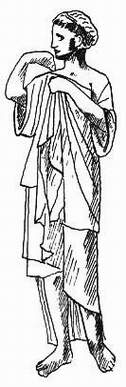
Diana
Diana is the Roman counterpart of Artemis, and because of her strong association with the Moon in all its phases, is a goddess of fertility as well as love. Like Artemis, she is goddess of the hunt and a virgin goddess, but can be invoked in her role as an Earth goddess and as protector of women in childbirth. Her beauty and hunting skills make her a perfect focus for the pursuit of love, especially from afar.
Myesyats
Like the lunar goddesses, Myesyats, the Slavic Moon God, represented the three stages of the life cycle. He was first worshipped as a young man until he reached maturity at the full moon. With the waning phase, Myesyats passed through old age and died with the old moon, being reborn three days later. As he was the restorer of life and health, parents would pray to him to take away their children's illnesses and family sorrows. Other sources have a female version, Myesytsa, a lovely Moon maiden who was the consort of Dazhbog the Sun God, and became mother of the stars.
Myesyats brings healing and family harmony.
Selene
Selene is the Greek goddess specially associated with the full moon, sometimes forming a triplicity with Diana and Hecate, the twin sister of Helios the Sun God. Selene rises from the sea in her chariot drawn by white horses at night and rides high in the sky in her full moon.
At the time of the full moon, she is invoked by women for fertility and by all who seek the power of intuition and inspiration.
Mother Goddesses
Mother Goddesses are for fertility, abundance of all kinds, female power and all rituals for women.
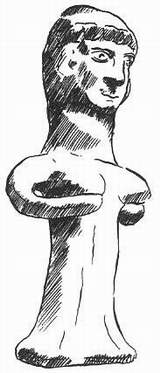
Astarte
Astarte is the supreme female divinity of the Phoenicians, goddess of love and fertility, associated with the Moon and all nature.
Invoke her for power and wisdom, seduction and passion as well as fertility.
Cerridwen
Cerridwen is the Welsh Mother Goddess, the keeper of the cauldron and goddess of inspiration, knowledge and wisdom. She is a natural focus for rituals involving all creative ventures and for increased spiritual and psychic awareness. Invoke her for divination and especially scrying and for all rituals of increase.
Ceres
Ceres is the Roman goddess of the grain and all food plants. Her daughter Proserpina was taken into the Underworld for three months of the year by Pluto, causing Ceres to mourn and the crops to die. This was the origin of winter.
Through this, she is seen as goddess of fertility and abundance, as well as a deity of the natural cycles of the year. She represents loss and is a focus for rites concerning grief and mourning, with the hope of new joy ahead for women and especially for mothers. Her Greek counterpart is Demeter.
Demeter
Demeter, the Greek Corn Goddess or Barley Mother, was the archetypal symbol of the fertility of the land. Demeter is often pictured as rosy-cheeked, carrying a hoe or sickle and surrounded by baskets of apples, sheaves of corn, garlands of flowers and grapes.
Like Ceres, she mourns for her lost daughter Persephone for three months of the year and so is another icon for those who are feeling sorrow or loss and for maternal sacrifice. But she can be invoked for all matters of abundance, for reaping the benefits of earlier work or effort, for all mothering rituals and as a protectress of animals.
Innana
Innana was a Sumerian goddess, known as the Queen of Heaven, who evolved into the Babylonian goddess Ishtar. Innana was goddess of beauty, abundance, fertility and passion, famed for her loveliness and her lapis lazuli necklaces. She was the first goddess of the morning and evening stars, a legacy that has passed to Aphrodite and Venus.
Like many of the Mother Goddess icons, she descended into the Underworld annually to face and overcome many trials, to bring back to life her shepherd god consort Dumuzi.
Ishtar
Ishtar, the Babylonian version of Innana, also descended into the Underworld each year to restore her consort Tammuz to life. She was a fierce goddess of weapons and war. In Ancient Babylon, a sacred marriage took place each year between Tammuz and Ishtar. This was celebrated at the festival of Akitu, or Zag-Mug, which marked the rising of the waters of the Tigris and the Euphrates and the coming of the spring rains, to bring fertility, at the spring equinox.
Like Innana, she is a goddess of fertility, restoration, renewal, birth and the life cycles; she also represents power with responsibility and necessary sacrifice for future gain, but above all transformation.
Isis
The Egyptian goddess Isis is the most powerful and frequently invoked goddess in formal magick. She is mother, healer and the faithful wife who annually restored her consort Osiris to life, thus magically causing the Nile to flood and fertility to return to the land. She is the patroness of magick and spell-casting, having tricked Ra the Sun God into giving her his secrets. Some accounts say she was taught by Thoth, god of wisdom and learning.
Her cult spread throughout the Roman Empire and she remained in Mediterranean lands in her guise as the Black Madonna, holding her infant son Horus, until the Middle Ages. She is sometimes represented as a vulture, in which form she appears on amulets (protective charms) with an ankh, the symbol for life, engraved on each talon. Isis demonstrated the power of maternal protection when she hid Horus in the marshes from his evil uncle who would have destroyed him.
Deities Of Marriage
These deities can be invoked in rituals concerning the family and the home.
Frigg
Frigg was the Viking Mother Goddess whose jewelled spinning wheel formed Orion's belt; as patroness of marriage, women, mothers and families, she can be invoked for all rituals concerned with families and domestic happiness. She invited devoted husbands and wives to her hall after death so that they might never be parted again and so is goddess of fidelity.
As Ostara, goddess of spring, she was known among the Anglo-Saxons and is remembered in the festival of Easter as a fertility goddess and bringer of new beginnings.
In her role as Valfreya, the Lady of the Battlefield, Frigg recalls the Northern tradition of warrior goddesses and offers courage to women.
Hera
Hera, the wife-sister of Zeus, is a the supreme Greek goddess of protection, marriage and childbirth whose sacred bird is the peacock. She is a powerful deity of fidelity and is called upon by women seeking revenge upon unfaithful partners.
Hestia
Hestia is the Greek goddess of the hearth and home, all family matters and peace within the home. She is a benign, gentle goddess and so can be invoked for matters involving children and pets.
Juno
Juno, the wife-sister of Jupiter, is the Roman queen of the gods, the protectress of women, marriage and childbirth and also wise counsellor.
Together with Jupiter and Minerva, the goddess of wisdom, she made up the triumvirate of deities who made decisions about humankind and especially Roman affairs. Her month, June, is most fortunate for marriage and, like Hera, her Greek equivalent, her sacred creature is the peacock. She is invoked in sex magick as well as for all matters concerning marriage, children, fidelity and wise counsel.
Parvati
Parvati is the benign and gentle Hindu Mother Goddess, consort of the god Shiva and the goddess daughter of the Himalayas. Her name means 'mountain' and she is associated with all mountains. She and Shiva are often pictured as a family in the Himalayas with their sons Ganesh, god of wisdom and learning, and six-headed Skanda, the warrior god. She is invoked for all family matters and those concerning children and by women in distress.
Vesta
Vesta is the Roman goddess of domesticity and of the sacred hearth at which dead and living were welcomed. The Vestal Virgins of Rome kept alight the sacred flame in Vesta's temple and this was rekindled at the New Year, as were household flames. Vesta can be invoked in rituals centred around the element Fire.
Father Gods
The Father Gods represent authority, channelled power, benevolence and altruism, nobility of purpose, expansion and limitless potential.
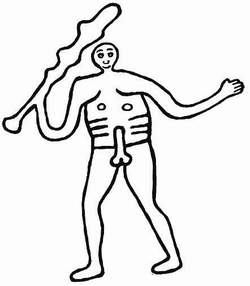
Dagda
Dagda, the Father God in the Celtic tradition, was also called Eochaid Ollathair (Father of All) and Ruadh Rofessa (the Red One of Knowledge). He was the first King of the Tuatha de Danaan, the Irish gods, and it was believed that he performed miracles and saw to the weather and the harvest.
Dagda was lord of life and death and the primary god of fertility. With his huge club, he made the bones of his people's enemies 'fall like hail beneath the horses'. With one end of the club, it was said, he could kill nine men with a single blow and with the other could instantly restore them to life.
His great cauldron was handed on to his daughter Brighid (Cerridwen in the Welsh tradition). In some legends, Dagda is associated with Balor, the Sun deity of the Formoiri, enemies of the gods, who was slain by Lugh, the young solar god, at the Battle of Moytura, thus representing the ascent of the new Sun.
The death of the old order, as a necessary requirement for the new, is a central motif in spirituality and so Dagda can offer a focus for rites of passage where change is necessary, but not necessarily welcomed.
Odin
Odin is the Viking Father God, known as the All-Father, god of inspiration, wisdom and poetry as well as war. Odin was desperate to acquire the wisdom and knowledge of the older order of giants. He traded one of his eyes for wisdom and obtained the knowledge of the runes, the ancient symbols of spiritual knowledge, by sacrificing himself on the World Tree.
Odin can be invoked for magic and divination, especially for casting runes, for inspiration with words and oratory, for expansion of horizons and for male power magic. If Frigg is also invoked, the energies are more balanced.
Deities Of Change
These deities may be invoked in rituals involving not only change but also good fortune.
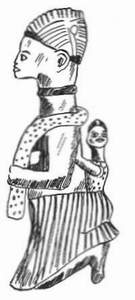
Oya
Oya is the African goddess, also known as Yoruba, who rules the winds and so controls the winds of change. She oversees trading and the marketplace, and brings good fortune to all honest traders and those who work with finance. She is very powerful, described as an Amazonian warrior and life-giver with dominion over the storms. She can be invoked at times of change and for all matters of employment, commerce good fortune and taking control of one's destiny.
A Practical Guide to Witchcraft and Magick Spells.
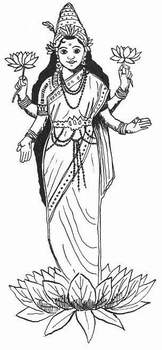
Lakshmi
Lakshmi is the Hindu goddess of wealth, beauty, joy, pleasure and good fortune.
At Divali, the Hindu autumn festival of light, lamps and candles are placed in windows so that Lakshmi will look in and endow prosperity upon the family. Rangolis, or coloured patterns, are painted on floors and walls to attract her. Rituals to invoke her usually involve candles and use gold or jewellery as a focus for her benevolence.
Deities Of Power
These gods and goddesses bring psychic self-defence, protection, righteous anger against injustice, also change, regeneration and survival.
These deities are very powerful and should only be invoked in their most positive aspects for the purpose of defending the weak and never for revenge or personal anger. Experienced witches call on them only rarely and with the purest intent under the law of threefold return. The exception is Bellona, who is a benevolent and effective focus for female power and courage.
Bellona
Bellona is the Roman goddess of war, the female counterpart of Mars whose chariot she drove into battle. She is especially good for women's assertiveness and self-confidence rituals. She carries a sword and wears a helmet.
Kali
Kali, the dark side of the Hindu Mother Goddess, came into being when Shiva, the husband of the Mother Goddess Shakti, taunted her for her dark skin. In fury she carried out rituals until her skin became golden inside. Shakti then shed her black outer skin like a snake and it formed the avenging destroying persona of Kali. Kali is depicted with her four arms holding weapons and the heads of her victims, her tongue lolling out, and covered in blood, signifying her power over life and death. She is often pictured dancing on Shiva whose body she trampled on, destroyed and then danced on once more to restore him to life.
Kali is invoked to remove fear and, it is said, to bring bliss to her devotees, and so she brings protection and regeneration after sorrow.
Persephone
Persephone is the Greek maiden goddess of transformation, daughter of Demeter and goddess of spring and flowers. She was abducted by Hades, God of the Underworld, and became Queen of the Underworld for the winter months, returning to the Earth as the light-bringer in spring and so representing the cycle of death and rebirth. She is especially powerful in rituals by or for young women, especially those who have suffered loss or abuse, and also for mother-daughter relationships. She is sometimes regarded as a symbol of grain.
Proserpina, daughter of Ceres, is the Roman form of Persephone.
Sekhmet
Sekhmet is the Ancient Egyptian solar and lion goddess created from the eye of Ra. She is sometimes pictured as a woman with a lion's head and so is a good to evoke for courage, righteous anger, protection of the vulnerable, psychic protection and the correction of injustice. As an avenging goddess, she should be used only as a focus for positive rituals, for, like fire, her innate power can blaze out of control.
Shiva
Shiva, or Siva, is the Hindu god of both creation and destruction, good and evil, fertility and abstinence. With Vishnu and Brahma, he forms the trinity of the modern Hindu gods. He is the Lord of the Dance who, it is said, will one day bring about the destruction of the world.
His symbol is the phallus, representing creative power, and many Hindus regard his benevolent, creative aspect as predominant. Shiva has three eyes, represented by the Sun, the Moon and Fire. His third eye allows him to see inwards and also to destroy whatever it looks on. He was not one of the original Vedic deities but became one of the supreme gods, according to legend, at the time when the universe consisted only of water.
Vishnu and Brahma were arguing about who was the greatest god when a great pillar of flame appeared between them. Shiva appeared from within the flaming pillar, which was symbol of his masculine power, and the other gods bowed before him.
Invoke Shiva for animus power, potency, survival and male rituals.
Shakti
Shakti, or Matahdevi, is the female energy or power of Shiva. Her name is also used for the wife of any Hindu god. She is the Mother Goddess and, like Shiva, creator and destroyer in her different aspects.
Shakti provides the energy that activates Shiva's male divine power, and her life-giving force animates other gods in difficult tasks. Although there are several other Hindu female goddesses, they all form aspects of Shakti and often their identities merge. One of Shakti's forms is as Parvati, the gentle mother. Shakti is potent for all rituals of women's power, especially when they must take the initiative, and she is easier to work with than Kali.
Triple Goddesses
The Triple Goddesses are for lunar magic and moving from one stage to another in the life cycle.
Brighid
Brighid, the Celtic Triple Goddess, is patroness of smiths, poets and healers and has the longest enduring cult in Ireland, which merged into that of the Christian St Bridget of Kildare. Her name means 'high one' and she is sometimes seen as three sisters, daughters of the god Dagda, the Divine Father, or as the triple-aspected maiden, mother and crone. She is invoked in fertility and healing magick and also for creativity, especially involving the written word. There are a number of sacred wells throughout England, Wales and Ireland dedicated to her or her Christian counterpart.
Deities Of The Environment
Invoke these deities for rituals involving all aspects of the environment and for healing the planet.
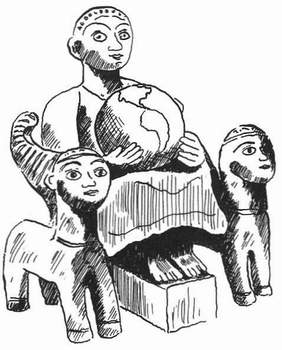
Gaia
Gaia is the all-embracing and all-nourishing goddess of the Earth. It is said that she supplies in her bounty all the necessary plants to cure any disease and, in spite of human pollution, she constantly heals and renews the planet. She is also a goddess of marriage.
She is the natural focus for all green rituals.
Tellus Mater
Tellus Mater was the Earth Mother of the Romans, the alter ego of Ceres, the grain mother, and guardian of the fertility of people, animals and crops. However, Tellus Mater is also the mother who receives the dead in her womb to comfort and restore and so, like Gaia, she is a excellent goddess for all green magick and rituals for healing pollution or deforestation.
Wophe
Wophe, or White Buffalo Calf Woman, is the sacred creator woman of the Lakotas and other peoples of the American Plains. Legend says she fell from a meteor and as she began her Earth walk, she was discovered by two young Lakota scouts who were hunting for buffalo.
She wore a pure white buckskin dress, her long hair flowing behind her like a sea of corn. She sang into the souls of the men that each should act on his thoughts. Eagerly the first, not recognising her sacred nature, hurried towards her and a white mist covered them. The sound of rattlesnakes was heard and when the cloud lifted, there were only the bones of the young man. She told the other to inform the elders of the tribe that she would come to them next morning with a great gift for the people.
A huge ornate ceremonial tepee was erected and in the morning she entered, carrying a special bundle on her back and singing a holy song. The men kept their eyes lowered when she entered, as she had instructed. She unfastened the bundle and took from it the buffalo calf pipe, which is still the most sacred religious object of the Lakota today.
The woman instructed the men in how to smoke the pipe, which in its smoke symbolised the visible Spirit, in the bowl Mother Earth and in the stem Father Sky, so that it might be used for prayer offerings to her and for bringing peace to divided nations. On her visits she also taught sacred ceremonies for restoring balance and healing to both Earth and people. She then set off to leave the camp, walking towards the West.
When she reached the outskirts, she rolled over on the ground and was transformed into a buffalo, changing colours several times. Finally, she changed into a white buffalo calf, rarest of the species, promising that when she was seen again she would restore harmony to a troubled world. The people followed her teachings, the corn grew, the seasons continued to flow in succession and they were hungry no more, as buffalo became plentiful.
By the end of the nineteenth century, however, there were in reality fewer than 200 buffalo left, where only years earlier it was estimated there had been several million. In the summer of 1994, a white buffalo calf was born in Jamesville, Wisconsin. As the prophecy had told, the white buffalo has changed its colours since birth, going from white to black to red to yellow and back to white. Since each colour represents one of the four directions, the buffalo is seen by many Native Americans as a symbol of the rebirth of hope. One visionary interpreted the birth of the white buffalo calf as signifying that the human race will be united, in spite of differences in creed and colour, and join together in peace.
Wophe is therefore an important symbol not only of the revival of the Native American wisdom, but also of healing and reconciliation of all people and of the land and all its creatures.
Deities Of The Male Principle
These deities are for the hunt, instincts, willing sacrifice and ecstasy.
Cernunnos
Cernunnos, meaning 'horned one', was a generic term for the various Horned Gods of the Celtic tradition. The god dates back to the shamanic figures portrayed on cave walls. Cernunnos was lord of winter, the hunt, animals, death, male fertility and the Underworld, and was sometime portrayed as a triple or trefoil god, an image later assimilated by St Patrick with his emblematic shamrock.
Other forms of the Horned God include Herne the Hunter, the Greek Pan, god of the woodlands, and Dionysus, Greek god of vegetation and the vine, whose ecstatic mystery cult involved ritual dismemberment and resurrection.
Cerunnos' importance has been in his continuing presence as the Horned God, the male principle in witchcraft through the ages, in modern Wicca and other neo-pagan faiths. He is also invoked for prosperity, fertility, instinctive power and knowledge of when it is necessary to hunt, whether to find employment or a home, and as protection against predators of all kinds.
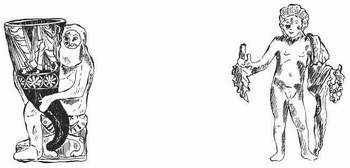
Dionysus
Dionysus, sometimes depicted as a Horned God, was a god of the grain, who died and was reborn every year as a child in a basket, representing the seed corn. He was the Greek god of fertility, ecstasy and wildness, who bestowed great abundance on his followers; his cult performed savage rites at Eleusius where human flesh was eaten as the bread of life. Not an easy deity to use, without great experience and restraint, as the excesses carried out under his name need to be kept in check while invoking the free spirit and the renewal of life. He is potent for breaking away from destructive situations or, ironically, bad habits such as alcohol.
Osiris
Osiris became one of the most important and popular gods in Ancient Egypt, mainly because he promised non-royal believers that resurrection and salvation from death were for everyone, poor as well as rich. Originally he was identified with each dead pharaoh, and his son Horus was identified with the reigning successor.
Osiris married his sister Isis, and his brother Seth married Isis's sister Nephthys. According to legend, Osiris was at first made an earthly king by his father Geb, the Earth God. Osiris ruled wisely, teaching his people about agriculture and the arts. But Osiris's brother Seth was jealous and vowed to kill him. Seth invited Osiris to a feast and showed the guests a fine coffer, promising that whoever fitted inside would be the owner. Osiris stepped inside the coffer and it fitted perfectly. Seth slammed the lid tight and he and his followers threw the chest into the Nile.
Isis searched for her husband and at last discovered the chest at Byblos on the Phoenician coast. She brought Osiris' body back to Egypt and conceived a son by her dead husband, hiding herself in the rushes of the marshes of the delta while awaiting the birth.
Seth discovered the body of Osiris, hacked it into pieces and scattered them throughout Egypt so that he could never be restored to life. But Isis searched once more and, assisted by Nephthys, remodelled the bones into Osiris' form and restored her husband to life once more.
When their son Horus, the Sky God, became a youth, he fought to avenge his father against Seth. The divine judges, including Thoth, god of wisdom, met in the Great Hall of Judgment and decided that Osiris should become not a living king once more, but eternal King and Judge of the Underworld.
Osiris was also god of vegetation, the fertile, flooding Nile and the corn, and so represented the annual dying of the land and rebirth with the flood. He is normally pictured as a man, bound in mummy wrappings.
Osiris is an important icon of the annual cycle of sacrifice and resurrection but, as with all the sacrifice gods, it is the female power that causes the resurrection. Like other sacrificed and restored gods, Osiris thereby represents the integration of animus and anima and sacred sex magick. He can be used in rituals for the balance of male/female energies or where the female in the High Priestess role takes the lead. He is also good for any magick that relies on a cycle of regeneration following a natural ending.
Deities of fire
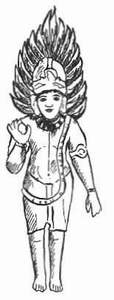
Agni
Agni, the Hindu god of fire, is said to be manifest as the vital spark in mankind, birds, animals, plants and life itself. He appeared in lightning, in celestial sun flares, in the sacred blaze rising from the altar and in household fires.
Agni was the divine priest and acted as messenger to the gods, interceding with them on behalf of mankind. The priest would chant:
'Agni, the divine ministrant of the sacrifice,
the great bestower of treasure.
May one obtain through Agni,
wealth and welfare.'
Agni is still important as the god of domestic and ritual fire and for spells for the increase of wealth, material goods, creativity and domestic protection.
Hephaestus
Hephaestus, Greek god of fire and metal-work, was thrown from Mount Olympus by his father Zeus because he took the part of his mother Hera in a quarrel; as a result of the fall, he became lame. He created armour, weapons and jewels for the gods in his workshop beneath the volcanic Mount Etna, in Sicily, and as a reward was given Aphrodite as his unwilling bride. He was among the least charismatic of the gods, but his Roman counterpart, Vulcan, fashioned Jupiter's thunderbolts.
Hephaestus is patron of metal-workers in much of the Western world and in the Middle East from where his cult originated. He is effective in all rituals for craftsmanship, for the acquisition of wealth and treasures, for the development of skills and precision and for controlled power for a particular purpose.
Deities Of Healing
Aesculapius
Aesculapius was a healer, son of Apollo and the mortal Corona, who lived during the eleventh century BC, and became a god after Zeus killed him with a thunderbolt for raising the dead.
The first shrine dedicated to Aesculapius was built in Athens in the fifth century BC by Sophocles. Other shrines followed in rapid succession, the most famous at Epidaurus, which became a major healing centre. Many were sited at sacred wells and springs. These shrines were dedicated to healing and dreams, and were the principle vehicle for obtaining relief or cure of illness of all kinds.
When Aesculapius appeared to the dreamers, he would tell them the medicine they should use and any treatment that should be followed. He can be invoked for healing and meaningful dreams, for good health and for divination.
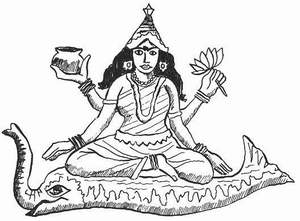
Ganga
Ganga is the Hindu water goddess who is manifest as the sacred river Ganges, daughter of the mountain Himalaya. She is a natural focus for healing rituals, as well as for happiness, fertility and prosperity, and for Water magick.
Iduna
Iduna is the Viking goddess of eternal youthfulness, health and long life. As goddess of spring, she possessed a store of golden apples that endowed immortality, fertility and healing and so she can form a focus for healing rituals, and for spells for beauty, health and the granting of wishes, especially those using apples as a symbol.
Panacea
Panacea is the Roman goddess of healing, who takes away pain. Daughter of Aesculapius, she and her sister Hygeia assisted in healing the sick in their dreams at the dream temples.
She is good for healing rituals for women, children and especially teenage girls.
Sulis
Sulis, or Sulevia, is the Celtic goddess of healing and especially of healing waters. Her name is derived from the Celtic word for the Sun and her most famous site is the hot mineral springs that have for at least 10,000 years poured from the ground in Bath, in south-west England. From Celtic times, perhaps even earlier, the springs became a formal centre of healing.
Sulis became Sulis Minerva under the Roman occupation and she maintained her role as a healing deity. The significance of the sacred springs continued and Edgar, the first king of England, was crowned there in AD 973. In medieval times, the springs were still a focus for healing pilgrimages and in the seventeenth and eighteenth centuries Bath became a fashionable resort where the wealthy would come to socialise and take the waters.
Sulis is potent for all healing water rituals. Because curse tablets as well as offerings have been retrieved from the waters, she is also associated with justice through karma and the banishing of sorrows.
Deities of wisdom
As well as wisdom, these gods and goddesses are for knowledge, truth and justice.
Athena
Athena, or Athene, daughter of Zeus, is goddess of wise counsel, both in peace and war, of intelligence, reason, negotiation and all forms of the arts and literature. The owl is her sacred bird and the olive her symbol representing peace, healing and nourishment.
Hathor
Hathor is the Ancient Egyptian goddess of truth, wisdom, joy, love, music, art and dance and protectress of women. She is said to bring husbands or wives to those who call on her and she is also a powerful fertility goddess. Also worshipped as a Sky Goddess, Hathor is frequently shown wearing a Sun disc held between the horns of a cow as a crown.
She was once entrusted with the sacred eye of Ra, the Sun God and her consort, through which she could see all things. She carried a shield that could reflect back all things in their true light. From her shield she fashioned the first magical mirror. One side was endowed with the power of Ra's eye to see everything, no matter how distant in miles or how far into the future. The other side showed the gazer in his or her true light and only a brave person could look at it without flinching.
Hathor can be invoked for all forms of mirror magic and is also associated with gold and turquoise and so jewellery made of these can be a focus for her powers. In the modern world she is guardian of businesswomen. Fiercely protective in defence of her own, she is especially potent against physical and psychic attack.
Ma'at
Ma'at, the Ancient Egyptian goddess of truth and justice, was responsible for maintaining the correct balance and order in the universe. She was daughter of Ra who created her to establish unity and order in the world. Ma'at is pictured as a woman wearing a single ostrich feather as a headdress.
She was all-powerful, even over the king, who had to rule with truth and justice to attain eternal life. After death, a person's heart was weighed on the scales of justice against the feather from her headdress to see if it was free from sin. She can be invoked for all rituals of justice, uncovering secrets, truth and trustworthiness.
Hermes
Hermes is the Greek messenger god who travelled between dimensions. He is associated with the wise Ancient Egyptian god Thoth and the later Roman Mercury. He is credited with great knowledge, healing powers and medical knowledge.
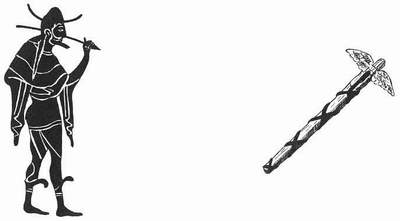
The double entwined snake of Hermes' and Mercury's caduceus, or wand, which is often a living growing staff, is a symbol both of healing and of powerful communication. The snake forms two circles, the interlinked cycles of good and evil, life and death, light and darkness. The wings on the caduceus are for wisdom, guarding against gossip and malicious words as well as illness.
Among Hermes' many patronages were moneylenders and thieves and so he can protect against poverty and trickery, as well as helping you to speak the truth that is in your heart.
Hermes can also be invoked for all medical and commercial matters, for good fortune of all kinds and for peaceful sleep.
Minerva
Minerva is the Roman goddess of wisdom, who ruled with Jupiter and Juno as the triumvirate of justice and wise power. She also controlled commerce and all crafts and is credited with the invention of music. She is often depicted in armour.
Minerva, whose creature is the owl, can be invoked in employment rituals and for the development of skills, retraining and musical ability as well as for truth and justice. Unlike Bellona (see page 70) and the warlike gods, both Athena and Minerva are used in rituals for using legal means or oratory and persuasion, rather than direct action, to overcome injustice.
Thoth
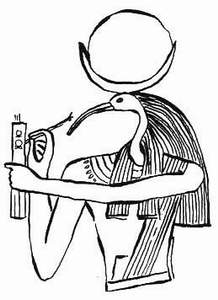
Thoth was the Ancient Egyptian god of the Moon, wisdom and learning. He was also god of time, languages, law and mathematical calculations, who invented the calendar and hieroglyphic writing. He is often depicted with the head of an ibis although he was worshipped as a baboon in Hermopolis.
Appeal to him for all matters of magical wisdom, learning, intellectual pursuits, examinations and better time management.
Wise Woman Deities
These goddesses are for transformation rituals, for endings that become beginnings and for accepting what cannot be changed.
Cailleach
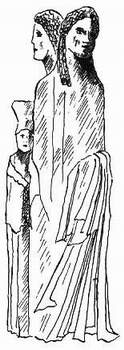
Cailleach, meaning' the Veiled One', is the Celtic name for a number of hag goddesses. These are powerful crone goddesses, who have retained their early associations with the winter. For example, the Scottish Cailleac Bhuer, the Blue Hag, manifested herself as an old woman wearing black or dark blue rags with a crow on her left shoulder and a holly staff that could kill a mortal with a touch.
She roamed the Highlands by night during winter when her power was at its greatest. Cailleac Bhuer is credited with creating the mountains by flying through the sky dropping stones, and so is said by some folklorists to be the origin of megaliths and stone circles and the nursery rhyme, There was an old woman tossed up in a basket'.
Hags are expert shapeshifters and as well as appearing as old women, they may assume the form of lovely maidens, hares, cats, stones and even trees.
Hecate
As well as being a crone goddess, Hecate is a goddess of good fortune, especially but not only of sailors and hunters. As goddess of the crossroads, where offerings were traditionally left to call up her blessings, she is regarded as the supreme goddess of witches and witchcraft and is akin to the Bone Goddess who transforms death into new more perfect life. She can be invoked for all waning moon magic and for rituals for banishing sorrows and bad habits.
Charges
Charges are declarations of the powers of the gods or godesses involved in the ritual, and are in themselves empowering and a way of linking the practitioner's own divine spark with that represented by the Divinity. They are similar to creeds in a Christian religious service.
The Charge of the Goddess
The Charge of the Goddess is a powerful way of focusing on cosmic energies. The Goddess is considered to be both 'transcendent', or above and beyond the created universe (like the traditional idea of God on a cloud, looking down and judging creation!), and also 'immanent', or manifest within every natural object, be it flower, stone, animal or person. The two concepts are complementary rather than contradictory.
Some practitioners feel that charges are an attempt to formalise energies that are beyond definition within a more conventional spiritual framework and that they are therefore artificial and restricting. If you have not used them before, I suggest you try working through the meditation given later in this chapter, to see if it is right for you.
The first and most popular version of the Charge of the Goddess was created by Gerald Gardener's High Priestess Doreen Valiente, herself one of the most influential people in formal magical traditions. Her version of the statement of the unifying principles of the Goddess is widely quoted and often memorised and sometimes adopted as a focus for trance work. (See page 300 for books describing her work.)
However, some practitioners, both solitary and those in less formal groups, create their own charges and may alter them as their confidence and experience of magick increase. You can create your own charge at the beginning of some rituals, or use an existing one, even if you do not acknowledge the Goddess as central to your personal spirituality.
You may view the divine force as a more abstract source of light and wisdom, but even so it can be helpful to personify it as a female (anima) and at the same time male (animus) form. Though the Valiente charge includes names of deities of both male and female forms, unless these mean something to you, you may want to exclude them or use names to which you personally relate.
You can refer back to the beginning of this chapter, where I listed a number of god and goddess forms, common to magick and drawn from different cultures, that emphasise specific strengths or qualities of the Divinity. However, your own list, drawn from mythology or perhaps your own background, may work better for you. The following is a version I have developed using three goddess forms from the Celtic tradition, my own favourite, which I have adapted for the three phases of the Goddess.
So spoke the Great Mother who has been known in many forms and by many names in countless ages, but is and always will be one and the same. As the Maiden, she is the Celtic Brighid who in early spring softens the Earth with her white wand of fire and so awakens the spring and restores fertility to land and people. As Mother, she is Cerridwen whose magical cauldron of wisdom and inspiration overflows to all who seek and call in need; finally she is Cailleach, the Veiled One, wise woman, healer and bringer of dreams, who in the winter of life transforms the old and outworn into new life to be born with the Maiden in the spring.
'When the Moon is full, you can call on me, goddess, mother, sister, friend, daughter and grandmother of all ages and all places, in joy, for I bring love and plenty. You may also bring me your hopes with the waxing moon and your sorrows on the wane, for I am with you in all states and stages, when you call and when you are silent, when you turn to me as an eager child and when you weep solitary tears in your pillow when your dreams have dissolved into ashes.
'I hold the key to the mysteries of existence and the universe, but these I will share with all who come with willing heart and open mind. For they are not hidden from you, but are all round you in every season. I am in the Moon as she passes through the sky, in the fertile Earth and the mighty waters, for I am them as I am part of you, and you of me, and you too are of the same divine fabric as the Moon and the fertile Earth and the waters, the stars, the sunshine and the life-giving rain.
'I do not ask sacrifice or worship, for I come to you in love as a gentle mother, with compassion, understanding and forgiveness of those things in your heart that you fear to look on in yourself. I am fierce, defending my young and my green places and creatures from all who would do them harm, but I would rather teach than avenge, restore and regenerate.
'I am the great healer of sorrow, pain, loss and doubt. Through me and through my herbs, oils, crystals and sacred waters, you can spread my healing wisdom.
As I give life, so in death all return to me to be transformed, renewed and born again. I was with you in the beginning and will be with you in the end.
'If you work with honour, love, humility and for the highest good, then you may realise your own divinity and spread light and fertility throughout the Earth. For what you give, will I restore to you threefold and more, time without time and for evermore.'
We are of the circle and we are the circle. May the circle be uncast but never broken.
If you are working in a group, you can each recite different parts of the charge, but best of all, through meditation, alone or as a group, you can work to create your own. If you are a solitary practitioner, you can read or recite your charge into a candle flame or in a wild, open place, and feel the energies resounding beyond and within you. You can also use it before divination or as an introduction to a ceremony for healing or greater understanding.
Meditation can last from five minutes to half an hour or more. In these initial stages, allow your own psyche to guide you as to when the experience is done. If other members of the group are still working, this is not a sign that their experience was more profound. Sit quietly or lie down, enjoying the silence and allowing the images of your meditation to develop quite spontaneously.
If you are working with a group, remain in the circle and pass round a bowl or chalice of pure water. If you are working indoors with candlelight, arrange the candles so they reflect on the water. As each person gazes into the water, they can contribute a series of images about what the Goddess represents to them, which will be stimulated by the meditation. You do not need to use a bowl of water, but it is a way of directing inner images externally to find expression. Some people prefer to pass round a crystal ball or a large piece of uncut crystal. A crystal is helpful if you find it difficult to retrieve images from meditation or if you find meditation unproductive, as the living energies provide a direct route to your unconscious wisdom.
After your meditation, if you are working alone, surround a clear bowl of water with white candles and, looking into it, begin to speak. You may like to record your words on cassette to make them easier to recall. If you do not consciously try to formulate poetic expressions, profound poetry and rich images will emerge almost from another place. This is the deep pool of collective wisdom speaking.
If you are in a group, the images can be set down by your scribe as a collective charge that can be changed over the months. Working on your charge can be a fruitful activity every six weeks or so as it reflects and stimulates the group consciousness.
Copy a version of your charge into your Book of Shadows. It is good to read if you feel afraid or alone at any time when you are not doing magical work.
The Charge Of The God
For some practitioners, this charge is less important, but I believe that the male polarity or energies are an integral part not only of the seasonal Wheel of the Year, but also of human experience, whether you are working alone or as part of a coven. It is one I have found helpful, but you can create your own through a god meditation by visualising a god form that seems relevant to you. Again I have used Celtic god forms:
These are the words of the Father, who is son and consort of the Great Mother, born in the beginning of She who created the universe from her own body, from her smiles and tears and ever-fertile womb.
'I am He, the wild untamed power of the hunt, the horned beasts and the woodland, that offers food, shelter and protection to people of all races, clans and creeds. I am Cernunnos, horned Lord of Winter; as Master of the Animals and Lord of the Corn, I offer willing sacrifice for the land and people; as King of the Dark Places beneath the soil, in the nurturing womb of the Mother, like all creatures who have entered the gentle Earth, I grow strong again, resting but never slumbering, until I hear the call at the darkest and coldest hour to be reborn as Lugh, radiant son; at that hour I bring the promise that the Sun will not die, but as the wheel turns bring lighter days and the promise of spring as the mid-winter yoke is conquered once more.
'I bring power, strength, courage and nobility to defend the weak and the vulnerable, and to give of my life blood to maintain what is of worth and just and lovely. Mine is not the path of ease, but of ecstasy in the wild wood where the untamed instincts bow only to natural law and natural justice; as the fruit of the sacred vine, Lord of the Dance, the young stag who masters the old; as the Barley King, I dance and laugh and sing of the spirit that never can be broken, of the potency of the life force coursing through my loins to bring increase and abundance, as fields and the animals and humankind are made fertile by the sacred coupling beneath the may bowers and blossoming trees.
'Birth follows death, plenty follows dearth, creation follows necessary destruction, and so renewed, I dedicate myself to the sanctity of all life ruled by the highest of intent and in humility in the hour of my greatest triumph.'
A Goddess Meditation
You can use this to create your personal or group Charge of the Goddess.
Find a quiet, safe place for meditation where you will not be disturbed and can fall asleep without coming to any harm, if you naturally drift from a meditative to a sleep state. Choose a time when you are not too tired and before you begin, have a bath to which a few drops of sandalwood or ylang ylang oil are added for heightened psychic awareness.
For the meditation, use a focus, for example a bubbling fountain or water feature, fragrant herbs or flowers, such as lavender or roses, or a scented candle of jasmine, apple blossom, lilac or neroli. (You can easily make a water feature by setting up a very small electric pump in a deep container in which you place crystals, greenery, perhaps a tiny statue and some plants.) You can work either alone or as a group, sitting in a circle round the focus, so that you can see it without moving your neck or head. Experiment until you get the height of the table and the distances right. For group work, you can light a circle of candles.
If you are working indoors, and there is no natural harmonious sound, such as the water, you may like to play softly a CD of rainforest or ocean sounds, birdsong or dolphin calls.
* Light incense sticks of frankincense or myrrh.
* Sit either cross-legged on the floor on a rug or blanket with your hands supporting your knees, in the lotus position if you are skilled in yoga, or on a chair with both feet flat on the floor. If you wish, support your back with a pillow and have arm rests on the chair for your elbows. Relax your arms and hands, with palms uppermost. It is important to be comfortable and not to be distracted by worrying about keeping in a particular 'approved' position.
* Visualise yourself surrounded by a circle of warm, protective light or, if you are using a candle, gaze into the flame.
* Take a slow, deep breath through your nose, inhaling the light. Hold it for a count of 'One and two and three' and slowly exhale darkness through your mouth.
* Let the circle of light expand and enfold you so that you are bathed in the light. You may find it easier at this point to close your eyes and to see the light with your inner vision.
* Within the sphere of light, allow the goddess form to build up quite naturally. It may be a familiar figure or a composite of many different female power icons of beauty, wisdom and grace. She may be old, young, wise or challenging, according to the qualities you are attracting to meet your as yet, perhaps, unformulated needs. In different meditations you may see different goddesses and so adapt the charge accordingly to emphasise particular strengths and qualities they evoke.
* Let words flow about the Goddess and her relationship with the world, nature and the cosmos.
* Do not attempt to hold or recall them, but allow them to ebb, form again and disperse, like waves or ripples on a pond.
* You may experience colours, lights and fragrances unconnected with the stimuli: sounds of wild animals or the wind through the trees, a sensation of warmth or coolness.
* When you are aware of the sounds of the world beginning to return and the light fading, gradually move away from the goddess form, letting the image fade.
* Reconnect with your breathing and allow gentle pink or purple light to radiate within you, leaving you calm and in a deep pool of inner silence. If you have closed your eyes, open them slowly, blinking and stretching slowly, like a cat uncurling after sleep.